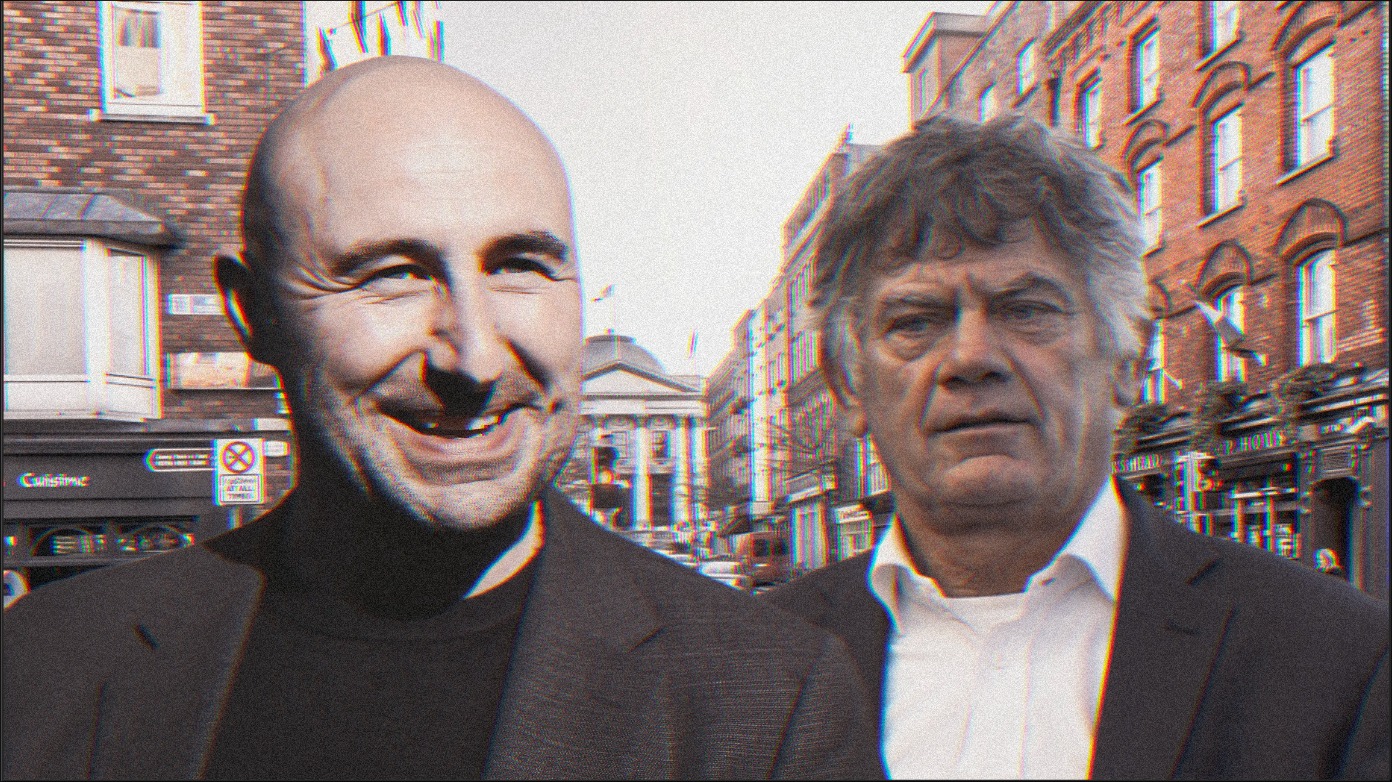
The by-elections have shown an unprecedented degree of political fragmentation in Irish politics. In Dublin Central, Daniel Ennis of the Social Democrats walked away with the seat, while in Galway West, Fine Gael’s Seán Kyne clinched the seat on the last count from Independent Ireland’s Noel Thomas.
Across just these two constituencies, six different parties had candidates polling above 10 percent – Fianna Fáil being notably absent from this list. Yet the biggest winner of all was ‘none of the above’, and by a long margin.
The overarching trend is undeniable. The by-election results confirm and deepen what we saw in the general election: the two main parties of Irish capitalism are hitting new lows, Sinn Féin has proven incapable of rallying growing anti-government anger behind itself, while more and more people turn their backs on the whole political set up.
Combined with mounting headwinds for the world economy, this is a finished recipe for social and political turmoil.
“I’m not arsed with any of it”
One of the most striking features of the elections was the low turnout in both constituencies. One non-voter aptly summed up the mood when approached by canvassers: “I’m not arsed with any of it”.
Just 39 per cent bothered to show up in Dublin Central. In Galway West only 44 percent voted. In both constituencies there was a more than 10 percentage point drop from the general election turnout – which already was the lowest in a century.
Turnout has been on a steady decline for the past decade, ticking downwards alongside Fianna Fáil and Fine Gael’s loss of support. Underlying both processes is a growing frustration with the political system and a widespread feeling that no genuine alternative exists able to provide a solution to the deep crisis experienced by workers and youth.
Polling in the lead-up to the by-elections showed that 53 percent of voters in Dublin Central and 46 percent in Galway West were in favour of radical change in the way the country is run.
This anger found a partial expression through the vote for anti-establishment candidates on the right, such as Independent Ireland who gained a boost from the fuel protests, as well as independent candidates like crime boss Gerry Hutch.
The Financial Times quoted one worker who supported Hutch in order to “put the cat among the pigeons”. Such is the real feeling of hundreds of thousands across this country towards the political establishment.
A victory for the establishment?
But if there is such anger against the establishment, then how come Fine Gael’s Seán Kyne was able to win in Galway West? If Simon Harris is to be believed, this result was “a victory for centrist politics.”
Unfortunately for Harris, the facts cry out against his optimism.
First, we should note the humiliating results obtained by Fine Gael’s ‘centrist’ partner in crime, Fianna Fáil. In the same month as their hundredth anniversary, the ‘most electorally successful party in the history of the State’ received a drubbing with their worst ever result in a by-election: a miserable 4.2 percent in Dublin. This in the same constituency where 20 years ago they reaped 44 percent of the votes – a devastating collapse!
On top of the lower turnout, the combined first preference vote for government parties has dropped across both constituencies. In Dublin Central they garnered 24 percent in 2024. This time around it was just 15 percent, and now neither party holds a seat there. And from 35 percent they fell to 29 in Galway West. So much for ‘centrist politics’!
In any case, it is worth noting that Fine Gael gained nothing from their electoral ‘victory’, since it was the departure of their minister Paschal Donohoe for the World Bank which triggered the Dublin Central election in the first place. In the Dáil arithmetic, they have only succeeded in standing still.
Fine Gael managed to scrape through in the end only because of the electoral system’s setup, and the fracturing of the anti-establishment vote. Unlike 2020, when Sinn Féin absorbed most of the anti-government support, this time voters deserting the so-called Civil War parties are moving in all directions, like steam dissipating from a burst pipe: toward right-wing candidates, the so-called reformist ‘left’, independents of all sorts and shades, and even a criminal boss.
In the lack of one party able to consolidate the anti-establishment vote, the transfer system ends up favouring the so-called centrist parties, especially on later counts.
Ironically – given that Galway West was the constituency of Catherine Connolly whose presidential campaign gave succour to the idea of a ‘united opposition’ – at the final count it was the transfers from Labour (part of this ‘united opposition’) that gave Fine Gael the seat.
Everyone eats Sinn Féin’s lunch
The elections have also exposed the difficult spot Sinn Féin are in. A former Galway city councillor summed up Sinn Féin’s difficulty: “They are pro-everything and anti-everything at the same time.”
Sinn Féin obtained their pole position by soaking up anti-establishment support from workers and youth fed up with the government parties. Following the 2020 general elections, after an unprecedented upsurge in support, they began moderating their language, getting ready to be a ‘sensible’ party of government – tempering their rhetoric about Palestine, meeting with representatives of big business, rolling back opposition to NATO, etc. – and taking ambiguous positions on ‘contentious’ questions like immigration.
This balancing act – attempting to appear simultaneously as a respectable party of government and an anti-establishment force – became increasingly unsustainable towards the end of 2023, when the party began losing support, culminating in their anaemic performance in the 2024 general election.
Since then Sinn Féin has appeared directionless. They have hardened their rhetoric in the Dáil, they have started attending protests again, and they have made concessions to anti-immigration politics in an attempt to win back support that has bled towards anti-immigration independents. But the by-elections have shown that none of this is working.
In Galway West, Sinn Féin was never in serious contention. And in Dublin Central – Mary Lou’s constituency, where they won a staggering 35 percent of first preferences in 2020 – they came second to the Social Democrats on first preference votes. The gap only continued to widen with each count as more and more transfers went Ennis’ way.
Social Democrats leader Holly Cairns has said that following their victory, the party is determined to “run a candidate in every constituency in the next general election”. As one of the few ‘left’ parties not stained by carrying out austerity in government, they could attract significant layers of younger voters, who previously leaned towards Sinn Féin. Labour, which performed well in Galway City, will hope to do the same.
Meanwhile Dublin Central delivered substantial support to independents Gerry Hutch and Malachy Steenson, who walked away with a combined vote of nearly 21 percent. In some areas of the inner city, together they won an absolute majority. Independent Ireland meanwhile cleaned up in rural parts of Galway West riding the wave of anti-establishment anger from the fuel protests, which Sinn Féin was incapable of connecting with.
All of this is sure to cause consternation in the ranks of Sinn Féin. For the time being, it is unlikely that McDonald’s course will be challenged. But it is clear that Sinn Féin’s current approach of trying to appease workers, youth, bosses and imperialists, all at the same time is not working.
By-elections and the future
In short, these by-elections paint a grim picture for the Irish ruling class.
Fianna Fáil and Fine Gael continue to see their support shrinking. Anti-establishment anger is shifting from Sinn Féin (who was eager to show it could be reasoned with) to a fragmented opposition. And turnout continues to slip as many simply grow disillusioned with the entire political system.
Trump’s war against Iran threatens to bring on a new surge of inflation and an even deeper cost-of-living crisis. Already, before a new inflationary wave has fully begun to bite, we saw the spectacular fuel protests. With rents increasing at the fastest rate in 20 years, and a slew of lay-offs in the tech sector, the cost of living will only produce further anger and even the threat of industrial action or street mobilisations.
In times of economic crisis, the ruling class needs political and social stability. After the financial crash of 2008 they got away with bailing out the banks and dishing out austerity partly because the government had the credibility to do so after the boom years of the ‘Celtic Tiger’ and a surge in support for Labour. Today not a single party has a fraction of that credibility, least of all the government. Only for a lack of an alternative they continue to limp on.
The political crisis makes it all the more impossible to tackle the mounting economic crisis. In turn, a new economic crisis can only further inflame the political crisis. The by-elections mark a new stage in the transformation of Ireland’s political system. But new and more explosive transformations are already being prepared.