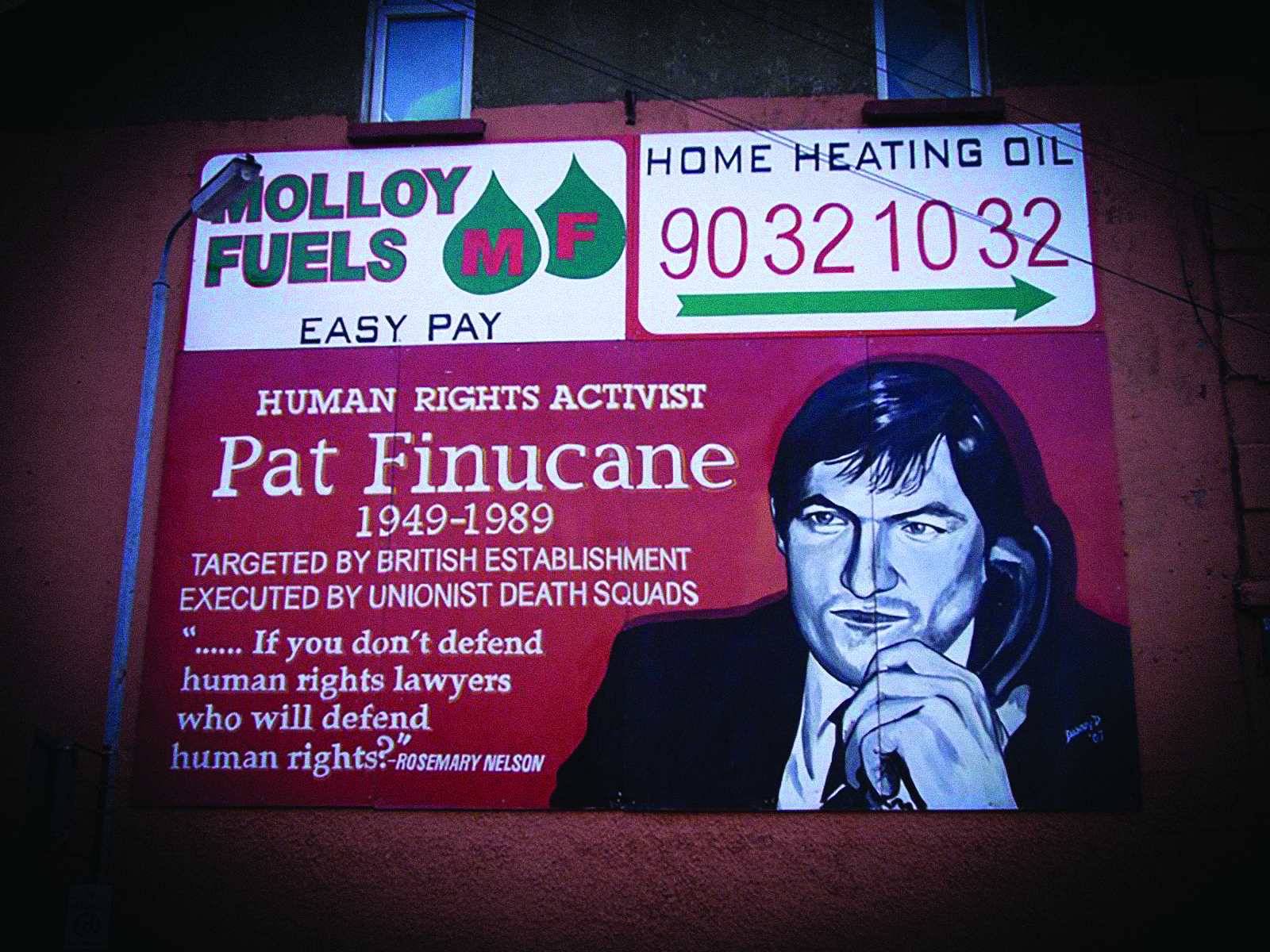
The newly established public inquiry into the murder of Pat Finucane is set to shine further light onto the bloody role of the British state in Ireland. The murder stands as one of the most notorious killings of the Troubles – not because it was unique, but because of the level of state collusion involved.
Finucane, a Belfast solicitor, was shot dead in front of his family in 1989 by loyalist gunmen. He had represented republican defendants and challenged abuses by the British state. For that, he was marked out. His killing was meant as a warning.
Investigations into the North of Ireland have repeatedly exposed the extent of Britain’s “dirty war” – with state agents occupying positions at the highest level within paramilitary organisations – directing operations, and allowing killings to take place in order to maintain control.
Finucane’s case is a tragic example of this, with numerous inquiries showing that the British state was deeply entangled in the killing. The 2012 de Silva report concluded that there were actions taken by state employees that “actively furthered and facilitated” his murder. In 1989 Metropolitan Police Commissioner John Stevens was appointed to investigate precisely this collusion.
His investigation lasted 14 years and found evidence of involvement of two British agents in the UDA – Brian Nelson and William Stobbie. Nelson worked for the army and was involved in targeting Finucane, while Stobbie was a police informer who provided one of the guns used for the killing.
But despite these findings, what followed was delay after delay. Both Labour and Tory governments repeatedly refused to establish a full inquiry, despite earlier commitments. Instead, limited reviews were offered – carefully controlled processes to relieve pressure, but never enough to implicate higher-ups in the establishment.
The new public inquiry comes after decades of relentless campaigning from the Finucane family and activists. Its purpose is to “investigate and report upon the circumstances of Patrick Finucane’s murder, and particularly the role of the State…”
Yet it must be said that this inquiry operates within the political and legal framework of the same state. It may reveal important details, but the foundations of British imperialism which are responsible for the killing will remain untouched. In fact, the scope of the inquiry means there will be no civil or criminal liability for any person who is revealed to have been involved in the murder.
The same system that carried out and covered up these actions cannot be relied upon to deliver justice. The murder of Finucane, and the wider pattern of collusion it represents raises the broader question of who controls society, and in whose interest?
As long as capitalism remains in place, the state will continue to act in defence of itself, private property and, in the North, in the interests of British imperialism. This is the real lesson of collusion.
To truly break with the past, we must go further than inquiries. What is required is a struggle to dismantle the system that made such crimes possible in the first place, to kick British imperialism out – and to replace it with a society run in the interests of the workers and youth of this island.