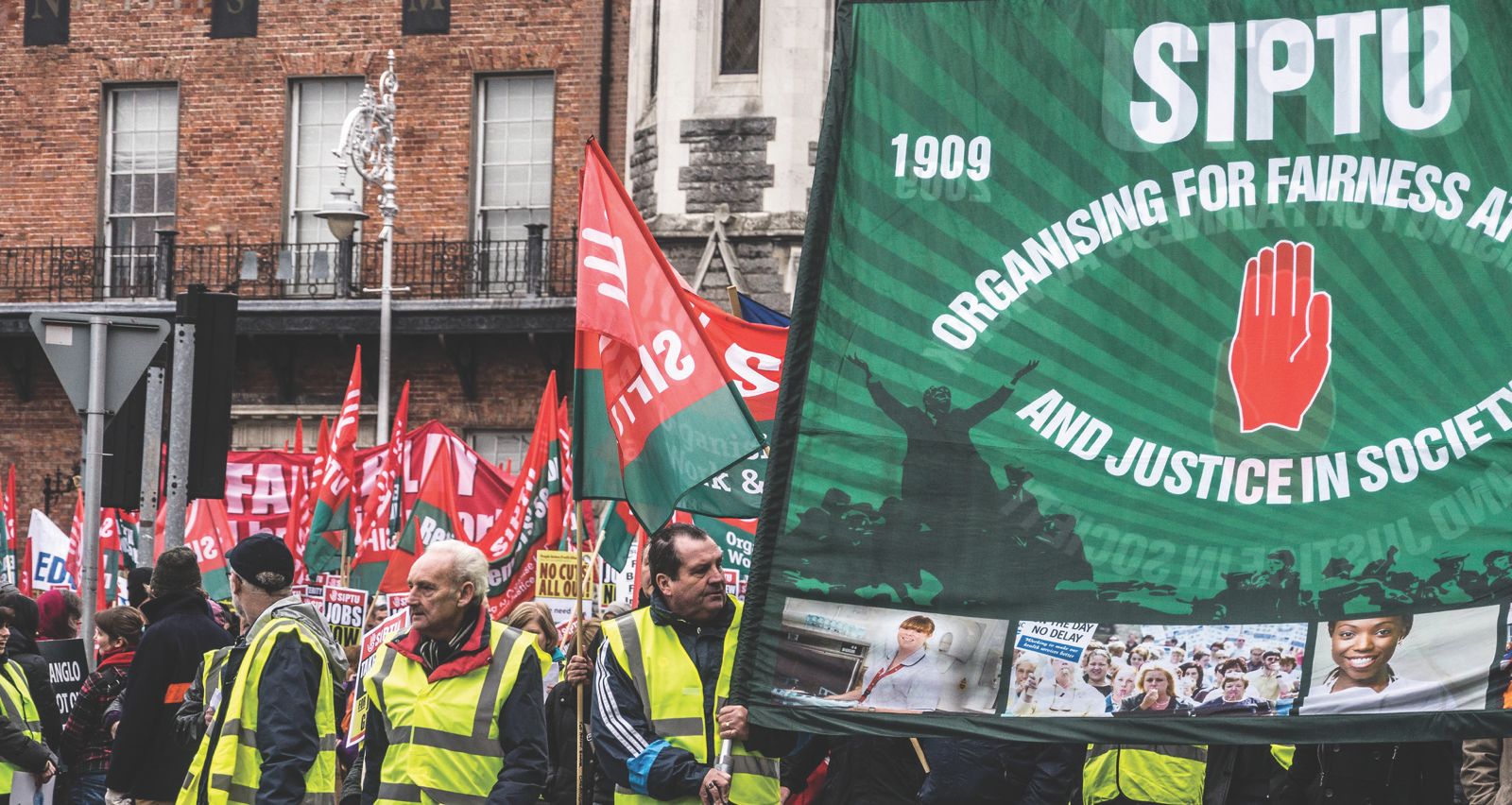
Ballots for industrial action have been underway among public sector unions after the breakdown of negotiations for a new public sector pay deal. Already, SIPTU members have voted 98 percent in favour of industrial action and 97 percent for strike action. Workers in Fórsa, the largest public sector union, have voted 96.6 percent for industrial action in what has been called the largest ever strike ballot by a trade union in Ireland. Meanwhile the union leaders, under pressure from their members, have turned up the heat on their rhetoric.
For Simon Harris this could hardly come at a worse time. On 6 October he has to present his first budget as Finance Minister. But for all the government’s talk about sticking to their spending ceiling, they have already blinked when it comes to excise cuts on fuel, which were due to be tapered off starting 1 September. All it took was a few vague threats from leaders of April’s fuel blockades about the possibility of another protest, and the Coalition decided to recall the Dáil early from its Summer recess to vote on an extension.
With the extreme volatility in the world situation threatening to wipe out Ireland’s windfall tax receipts at a moment’s notice, the ruling class is eager to limit spending increases. But public sector workers are looking to claw back the cuts to real pay they have been forced to take by past sub-inflation pay deals. Capitalist publications like the Irish Independent now warn of a “Winter of discontent” on the horizon.
Economic uncertainty
While governments across the world face mounting deficits, the Irish exchequer in recent years has enjoyed significant windfalls in corporation tax. This year windfall tax receipts are set to reach a new height of €35 billion on the back of the OECD’s new minimum tax rate on corporate revenues.
But they are labelled as windfalls precisely because nobody expects them to last. In the past week, the European Central Bank warned that valuations on the US stock market are close to their historical peak and a market correction is likely, which would become “a question of financial stability for the euro area”. Meanwhile, by baking these temporary tax receipts into current spending year after year, Irish capitalism only becomes more dependent on taxes from a handful of American tech and pharma companies.
This uncertainty was the reason for last year’s anti-worker budget. Cost-of-living measures such as energy credits and reduced student fees were removed in one fell swoop. And income tax bands were frozen, leaving workers to face the brunt of inflation, while big multinationals were awarded fresh tax breaks in an effort to offset tariffs. All of this only months before the cost-of-living crisis deepened with the Iran War and the closure of the Strait of Hormuz.
It’s in this context that Simon Harris published the Summer Economic Statement, outlining the parameters that by some miracle he hopes to hold himself to on budget day.
Deal or no deal?
Budget 2027 is to contain an expenditure ceiling of €125.5 billion, which leaves 7.7 billion for spending increases. Of this, the Irish Fiscal Advisory Council (IFAC) estimates that €2.4 billion will be gobbled up by 2026 overspends and capital spending projects the government has already committed to, while another €4.5 billion would be needed just to maintain the current level of services in light of inflation and an ageing population.
Unless cuts are made elsewhere, this leaves just €800 million for new spending. And IFAC projects that a new agreement giving public sector workers a pay increase of just 4 percent next year, which would still leave real wages below their level a few years ago, would cost the government another €1 billion.
But unlike previous years, the unions – under pressure from the working class – aren’t so quick to reach a deal that will guarantee ‘industrial peace’ in return for a meager pay rise destined to be swallowed up by inflation. Negotiations reportedly broke down over the insistence by Fórsa leader Kevin Callinan that any pay deal must include wage increases pegged to inflation. This would be a very good start. After all, basic pay increases for public sector workers from 2021 to 2025 added up to just 15.75 percent, whereas average annual inflation over that period totalled 20.8 percent.
The government knows that a pay increase for public servants would not only put them on track to race past their spending limits again, but also give a powerful example to workers in the private sector, including those American multinationals the government is eager to placate by not upsetting Ireland’s ‘competitiveness’. At the same time though, Ireland’s EU presidency means that industrial action in the public sector, especially strike action, has the potential to be all the more disruptive.
This puts the ball squarely in the trade unions’ court. Out of 425,000 public sector workers in Ireland, about 300,000 belong to one of the major unions. A mobilisation of public sector workers could win significant concessions.
Unions must go on the offensive
The union leaders are under mounting pressure from their membership. These workers have had their living standards under attack for years and just a few months ago they saw farmers and hauliers win cuts to excise on fuel to the tune of €1 billion and counting.
A number of deals recommended by union leaders in recent years were rejected by the rank-and-file, highlighting how shaky the authority of the union tops is right now. Workers are eager to fight and it’s the union leadership that’s been holding them back.
Commenting on the possibility of a traditional deal, general secretary John King revealed the whole truth. “Given the level of apathy and real anger there is out there among workers, we’re sensing that’s not going to work this time.” In other words, it’s not that I want to fight for workers’ living standards like I was elected to, but that I can’t not do it this time around.
The last thing these trade union bureaucrats want is a struggle between public sector workers and the government. But the mood among the rank-and-file is very different, which is why the union leaders have had to adopt a more fighting tone.
Public sector workers should learn from the example set by farmers and hauliers, which showed that militant action, not polite negotiations, wins concessions.
The coming budget will be presented by the same Harris who in 2019 as Health Minister threatened nurses with financial penalties for going on strike. It’s high time for workers to settle accounts with this loathsome capitalist stooge.