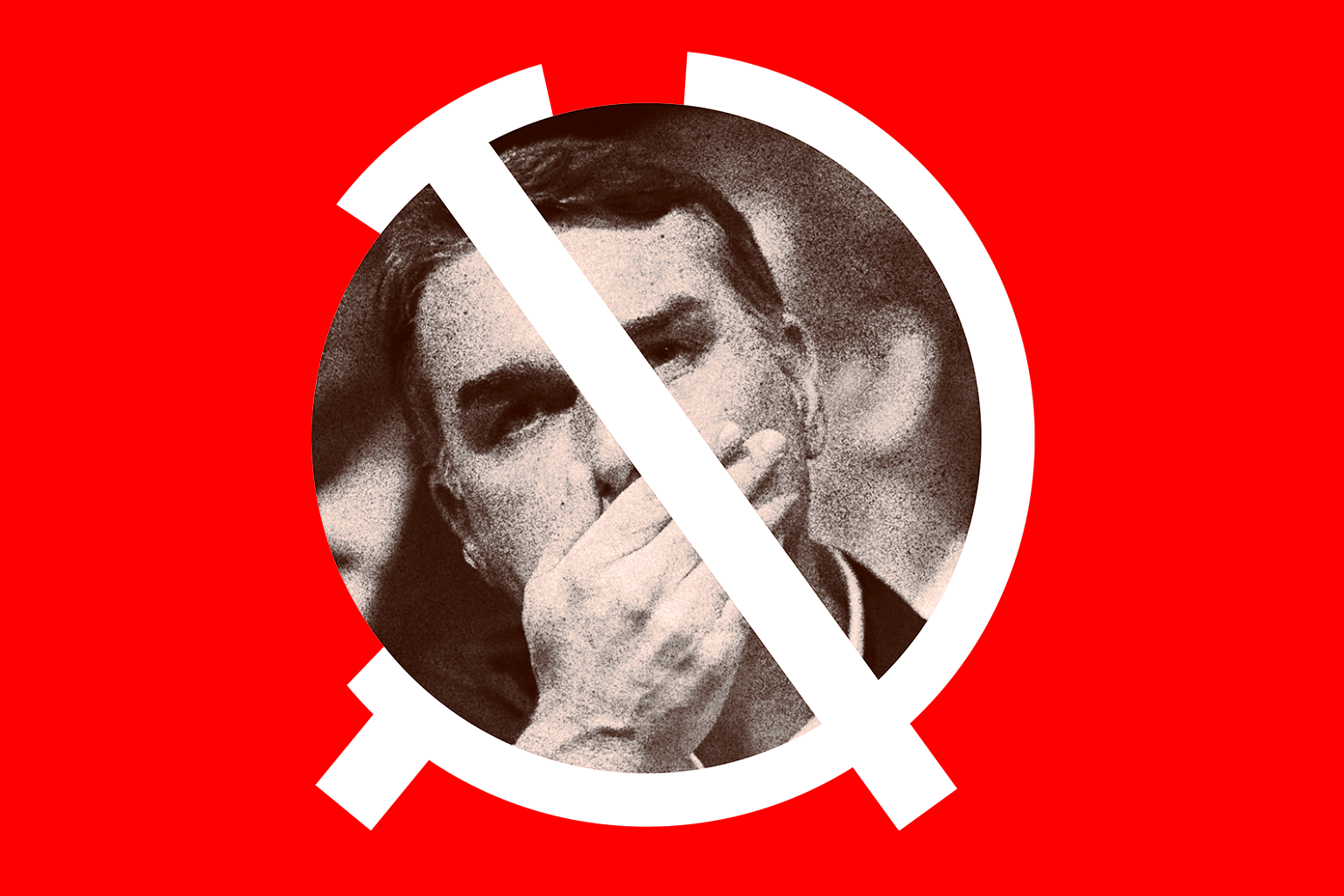
In an unprecedented turnaround, Lula has won the second round of the Brazilian presidential election. Such a turnaround had never happened before.
Lula received 53.8 million votes (45 percent) in the first round. He now received over 64 million (51 percent) votes – that’s an increase of over 10 million votes. Meanwhile, Bolsonaro went from 56 million in the first round (47 percent) to 59.8 million now (48 percent).
This means not only that Lula got the bulk of the increased turnout and the lower number of spoiled ballots, but he must have also got the votes of some of those who had voted for other right-wing candidates in the first round.
This was only possible because of the enormous mass mobilisation in the last few weeks, led and pushed by the youth. The victory of Bolsonaro in the first round provoked a backlash, which managed to change the whole dynamic of the situation. Two million in Rio de Janeiro, one million in São Paulo, and hundreds of thousands across the country turned out for marches, mass demonstrations and rallies which were more radical and went beyond anything the Workers’ Party (PT) leadership wanted.
That was the decisive factor. Many who, in the first round, could not bring themselves to vote for Lula – whose running mate is a key representative of the ruling class and who has carried out no significant reforms in favour of the working class while in power – now turned out in large numbers to stop Bolsonaro.
Now Lula will have to contend on the one hand with a legislature where the right wing has a solid majority, and, on the other hand, with the mobilised masses who expect him to deliver. An impossible equation.
What the last few weeks have shown is that the terrain in which the right wing can be defeated is in the streets, through struggle. That is the way forward.
As the comrades of the Brazilian section of the RCI pointed out:
“A feature of the demonstrations following the first round of voting has been the affinity shown by broad segments of the public for communist symbols – and for those who dare to display them. Hand-crafted hammer-and-sickle emblems, improvised communist-themed T-shirts, and radical slogans scrawled on poster boards are appearing everywhere at these protests. While the bourgeoisie and reformists have managed to keep the demonstrations ‘orderly’ and focused on electoral politics, clear insurgent and radical elements are maturing among the protesters.”
The presence of Jones Manoel – the elected communist MP and leader of the radical left caucus – at the mass demonstrations of the last three weeks is the most visible symbol of this yearning for more radical politics, for an end to class collaboration.
The Brazilian section of the RCI participated actively in the mass mobilisation of the last few weeks with three clear slogans:
- Defeat Bolsonarism
- Critical vote for Lula
- Build a communist alternative
Now that last task becomes even more pressing.
The Brazilian election also gives the lie to the idea of the ‘Trumpification of Latin America’, which has been trumpeted by the bourgeois media internationally over the last few months. Yes, right-wing pro-Trump demagogues have won the elections in most of the countries of Latin America. But that does not reveal widespread support for their policies nor those of Trump. What it reflects is the limitations of the ‘progressive’ left in power in the previous period, because of their meek half-way policies.
Thus, even in countries where reactionary right-wing demagogues have won recently (like Chile and Colombia) what we see is a growing protest movement on the streets – including a general strike in Colombia on 14 October.
We republish here the analysis of Internacional Comunista Revolucionária (Brasil), the Brazilian section of the RCI. Written after the first round of the elections and published in Portuguese on brasilcomunista.org on 21 October, it explains the real legacy of Lula’s government, how we can defeat Bolsonarism permanently, and how communists should – and have been – intervening in these massive demonstrations.
Defeating Bolsonarism and overcoming Lula’s reformist contradictions
Johannes Halter
A high-voltage shock coursed through all class-conscious workers and young people on the night of 4 October. Millions had been convinced by the PT’s campaign strategists and candidates that they could be entrusted with the task of defeating Bolsonarism and, worse still, that Lula would win in the first round of the elections.
The dramatic result of that Sunday, which we explain here, came as a revelation to those conscious of the real situation: ‘Either we take this campaign into our own hands, or defeat will be certain!’
Courage and spontaneity from the grassroots
That night saw a sudden shift in Brazil’s political landscape. By the very next day, spontaneous demonstrations were taking place, organised by university students, starting at the Federal University of Fluminense (UFF) in Niterói and at the Federal University of Pernambuco (UFPE) in Recife.
WhatsApp groups were set up and began coordinating dates and times for demonstrations in cities across the country. These spontaneous mobilisations began to set the tone of the campaign, replacing the institutional tone that had prevailed until then.
In Recife, a building at UFPE was set on fire the day after the student demonstration. Everything points to this having been orchestrated by Bolsonaro supporters. In pro-Bolsonaro WhatsApp groups, messages mentioned throwing bombs at UFPE after the demonstration. One of the members of these groups – called ‘Anti-Lula’ – was Thiago Medina, currently a city councillor in Recife and a federal deputy in Pernambuco for Bolsonaro’s party, PL.
However, the demonstrations grew so rapidly that attacks like this were discouraged, and the most radical Bolsonaro supporters had to restrain themselves.
The demonstrations in the days that followed were characterised by courage and a willingness to fight Bolsonarism in the streets. Young people who had never been involved in politics before made their debut by taking to the streets and shouting slogans. Schools became the scene of heated debates amongst teenagers and even children, echoing the passionate discussions taking place in their homes and communities. Veteran activists were also drawn in, ready to once again take action.
Within a few days, what seemed impossible came to pass. On 11 October, Avenida Paulista in São Paulo was completely overwhelmed by more than one million people. The avenue traditionally serves as a barometer for the scale and intensity of demonstrations. It was impossible to even get mobile signal; such was the sheer number of devices concentrated in one place.
This seismic event was surpassed the very next day. Rio’s seafront brought together over two million people, prompting comparisons with Lady Gaga’s last concert.
Astonishment above
The reaction from the leaders of the working-class parties, trade unions and organisations was completely different.
First came astonishment. They had assumed it would be possible for Lula to win in the first round. They had lined their own pockets with state money from the party and the electoral fund to run billion-dollar campaigns. They believed that the saccharine world they had constructed in their minds – and in their affluent lives – corresponded to the hellish existence of the Brazilian masses.
The astonishment soon gave way to them doubling down on ‘anti-fascist’ grandstanding.
Nothing is more comforting than diverting attention from one’s own mistakes. Instead of analysing what happened and correcting course, so-called ‘Marxists’, such as Valério Arcary, went so far as to demand: ‘No assessment!’, ‘No criticism now!’ ‘Close ranks and fight to the end!’. Following this line of thinking is like suffering a heavy defeat in battle and refusing to analyse the reasons behind it, to correct them and thereby win the war.
Only after the street protests had already taken off did the parties, traditional working class organisations and their leaders take action. This was in an attempt to control them or, at the very least, keep them within the confines of an electoral movement.
The most emblematic case was the demonstration in São Paulo on 11 October. Lula only confirmed his participation the day before. He gave a short speech from a sound truck, and his team immediately gave the order to disperse, without a march. The PT leadership is afraid that the street movement will spiral out of control.
Free public transport: a gesture to the left
Those in power are seeking to cover up the reasons for the punishment they received at the polls by claiming that the Presidential Palace failed in its communication strategy.
According to this explanation, the problem was that social media was more effectively utilised by Flávio Bolsonaro’s supporters. Lula’s supporters, it is claimed, failed to make better use of the algorithms and show voters that the government deserved their support at the ballot box.
This explanation presupposes a level of approval for the Lula 3.0 government that is not borne out by the masses in real life.
A few days later, Lula presented a series of new election pledges. One of the most significant was the proposal for a constitutional amendment (PEC) to introduce free public transport at weekends and on public holidays. According to the announcement, the measure would be funded by using part of the resources from current parliamentary amendments.
Here we have a clear example that the problem was not merely one of communication. The fact that Lula had to commit to a proposal such as this after his loss in the first round shows that there was a programmatic problem, one that was fundamentally political.
Including free travel in his programme sends a signal to Lula’s left-wing supporters – albeit a very tentative one, as the free travel would only apply at weekends and the public transport concessions to private companies would be maintained.
This issue has been under discussion since Dilma Rousseff’s term in office from 2011-2016, when young people and workers took to the streets across the country during the June 2013 protests. Out of the struggle against fare rises and repression, one of the demands that emerged was precisely… FREE PUBLIC TRANSPORT! It took Lula finding himself on the brink of losing his re-election to finally incorporate that measure into his programme 16 years later.
The end of the 6×1 workweek: a historic victory
The result of the first round represented an upset for the balance of power within the Brazilian right. The PL’s advance in the National Congress shook the plans of established bourgeois parties and representatives.
Among them was Senate President Davi Alcolumbre, who had been in negotiations with the government to allow a vote on the proposed constitutional amendment (PEC) to end the 6×1 (six days on, one day off) work schedule. With his interests at stake and seeing the massive mobilisation in favour of Lula’s re-election, Alcolumbre scheduled the vote, thereby favouring the government’s campaign.
The approval of the constitutional amendment on 14 October was a historic victory for the working class, won by the masses on the streets. Its implications for this second round are enormous and must be carefully analysed by communists.
Firstly, this issue did not originate with Lula or the PT, but arose spontaneously in 2023. The following year, it gained prominence on the streets, with mass demonstrations in over 100 cities. The PEC was tabled by the VAT (Movimento Vida Além do Trabalho, ‘Life Beyond Work’) movement through Erika Hilton, who proposed a 4×3 shift pattern and a 36-hour work week. Yet this had no support from the government, nor did Lula utter a word on the subject.
It was only after the bill had made progress in the National Congress that the government began to defend it. It did so, however, exclusively through the institutional channels of the political system.
In the process, the proposal was watered down to a 5×2 shift pattern and a 40-hour working week, and a transition period was imposed. Furthermore, government pressure to bring the bill to a vote only materialised on the eve of this year’s election campaign, in order to turn its approval into an electoral asset.
The VAT movement, led by Rick Azevedo, after being co-opted into Guilherme Boulos’ political faction, accepted the government’s tactics. Was this an achievement? Yes – a historic one! However, it came at a cost, because of the tactics used by the government to achieve it.
Reformism’s verdict: guilty!
This situation between the first and second rounds illustrates the nature of reformism. Its character can only be understood if one takes into account the contradiction at its very core.
The foundation of reformism in general, and of the PT and Lula in particular, is the drive to secure concessions from workers to capitalists, on the one hand, and to press for some concessions from capitalists to workers, on the other. This is the logic that has driven Lula since his days as a trade unionist.
This reformist policy has been the hallmark of Lula and Dilma’s terms in office at the head of the Republic and the PT parties – both within the political system and in the leadership of social movements.
It is only by considering this contradictory aspect that one can understand how, even with a record of betrayals, cuts, privatisations and counter-reforms, Lula and the PT still command such a reserve of electoral support and maintain the illusions the masses have in them. This support stems from the advances and achievements over recent decades, despite all the concessions they have made to the capitalists.
The fact is that every step forward, taken in a limited manner and through concessions to the capitalists, has led to new contradictions. This has led new generations of workers to correctly link their problems and anxieties to the PT governments. It is this perception that fuels Bolsonaro’s demagoguery.
That is why the verdict delivered at the polls in this first round rejected reformism. What we witnessed on 4 October was a symptom of the historical exhaustion with the current reformist government in Brazil.
Penal populism: a signal to the right
The outlook is not promising for Lula and the PT. Not only because of the election results for the National Congress and state governments.
The reformists face ever-greater limitations as capitalism sinks deeper into its periodic crises. As the pie gets smaller, the capitalists are willing to give fewer crumbs. As the economic crisis and inter-imperialist conflicts intensify, the reformists are forced to concede more and more, whilst gaining less and less in return.
Faced with the inability to move further to the left in the current situation, Lula further highlighted the contradictions of reformism during the debates on the proposed Constitutional Amendment (PEC) on Public Security.
This measure aims to reform the Brazilian bourgeois state, as if the existence of crime and criminal organisations were a problem of a lack of police intelligence and coordination between the forces of repression. Furthermore, in the midst of this debate, Lula announced that he is in favour of lowering the age of criminal responsibility to 16 for heinous crimes.
Whilst the constitutional amendment proposal for free public transport signals a shift towards the left, the proposed constitutional amendments on public security and the lowering of the age of criminal responsibility signal a shift towards the right.
This is a concession to a long-standing demand of the Brazilian right, guided by the logic of increasing state repression at the expense of greater investment in social services and the creation of skilled jobs. Instead of putting forward proposals that tackle the root causes of the problem of crime by offering young people a dignified future, Lula is yielding to conventional ‘wisdom’ and seeking to win over right-wing voters on the right’s own ideological ground.
A ‘law-and-order’ and ‘electoral’ tactic of confrontation
These conflicting signals from Lula to the left and right are compounded by the approach adopted by the party, trade union and the student organisations linked to the government in response to the spontaneous movement on the streets.
After being caught off guard in the days following the first round and over the subsequent weekend, government supporters worked to decentralise the protests against Bolsonarism in São Paulo. Once the demonstrations had been divided, they endeavoured to give them a ‘peaceful’ and ‘electoral’ character.
This approach, emanating from the leadership of the PT, the Communist Party of Brazil (PCdoB) and Socialism and Liberty Party (PSOL), as well as from Lula himself, reflects their hope of being able to continue managing Brazilian capitalist society through the institutions of the existing bourgeois state.
The fact is that young people and workers in France, Spain, Belgium and Indiaare, at this very moment, demonstrating that the demands of the exploited will be achieved by imposing them from outside the institutional framework.
This ‘peaceful’, ‘electoral’ tactic of confronting Bolsonarism disarms our class for the period of intense class struggle that is already on the horizon from 26 October onwards. The current political ferment is preparing the ground for coming battles, which will be far from ‘peaceful’.
Communists must make the most of this moment. We must help the vanguard of the working class to understand the nature of the situation and the need to radicalise the struggle to defeat Bolsonarism and pave the way for communism.
Janones and Lula’s Army
Despite this political ferment, seven million people have signed up to ‘Lula’s Army’. That is to say, they have joined the mailing list of the re-elected federal MP Janones.
This figure has come to prominence by employing methods similar to the underhanded tactics of Bolsonaro’s supporters. For Janones, any means are justified to confront his enemies, including lies and fabrication. With sensationalist, strident and provocative rhetoric, this so-called ‘Lula’s Army’ has mobilised people who want to defeat Flávio Bolsonaro, ranging from mere anti-Bolsonarists and avowed PT supporters to those who consider themselves communists.
The space occupied by Janones is yet another contradictory side-effect of Lula’s reformism. Instead of the PT, which has 1.6 million members, the main mass initiative is being organised by a figure from the Rede Sustentabilidade (REDE) party. In other words, instead of a workers’ party, it is a bourgeois party that is leading the mobilisation. We would point out that REDE is a party founded and financed by major Brazilian capitalists, such as Neca Setúbal (Itaú) and Guilherme Leal (Natura). It is one of the manifestations of ‘green capitalism’ in Brazil.
Janones and REDE employ bourgeois methods to wage political struggle. They call on Lula’s voters to challenge Bolsonaro’s symbols by wearing the colours of the national football team and the Brazilian flag to ‘make the L’. In other words, they are asking us to wear the colours that represent the green of the Braganza family and the yellow of the Habsburg family.
They try to convince us to proudly wear these symbols, used since the slave-owning monarchical regime, through the elitist First Republic, the Vargas dictatorship, and the 21-year military dictatorship.
Janones’s tactic is one of electoral combat, which sidesteps the fundamental issues of class. It may be effective for winning votes within the logic of ‘fan wars’. But it does nothing to help the working class move towards a definitive solution to the underlying political problem. This is because Janones and the REDE party intend to respect the cornerstones of this bourgeois republic, to save this increasingly hated system, and to give Brazilian capitalism a more humane and ‘green’ appearance.
Sympathy for communism at the demonstrations
At the same time, one of the hallmarks of the demonstrations following the first round has been the sympathy shown by broad sections of the population for communist symbols and for those who dare to uphold them. Hand-made hammer-and-sickle symbols, improvised communist T-shirts and radical slogans on placards are appearing everywhere at the protests.
Whilst the bourgeoisie and the reformists have managed to keep the protests ‘peaceful’ and ‘electoral’, there are clear insurgent and radical elements maturing amongst the demonstrators.
Our newspaper, Brasil Comunista, has been eagerly snapped up by hundreds of demonstrators at every new street rally. Our posters and stickers are also in high demand amongst the demonstrators. Brasil Comunista T-shirts and flags are another highlight. Jones Manoel’s presence at rallies beyond Pernambuco has also been a great success, particularly when he speaks of communism and the ‘Brazilian revolution’ in his speeches.
But there is still a lack of a communist and revolutionary alternative that can be seen as a viable reference point for the masses, for these instinctive communists. A party of this kind would be capable of leading the workers’ struggle consistently beyond elections, with the aim of seizing power for the working class. Such a party would reclaim the symbols of the working class – such as the colour red, representing the blood shed in the struggles, and the hammer and sickle, a legacy of the October Revolution of 1917.
The proposal from Brasil Comunista is that communists familiarise themselves with the 20 points of the Programme for a Communist Brazil, complete therecruitment form and join one of the branches of the Revolutionary Communist International (RCI). Within these cells, we combine well-planned interventions into the class struggle with a special focus on the study of Marxist theory. Every RCI activist is part of the same global party, present today in 70 countries. We are building a true International, with congresses, democratically elected bodies, and ideas that constitute the genuine thread of Marxism, continuing the legacy of Marx, Engels, Lenin and Trotsky.
The critical vote as a tactical measure
At this moment, the struggle for communism in Brazil requires the struggle to defeat Bolsonarism in this presidential contest for control of the Brazilian bourgeois state. This is because the far right, represented by Flávio Bolsonaro, seeks to inflict the heaviest defeats on our class and to subordinate the country to US imperialism. Lula, on the other hand, despite all his reformist contradictions, is a candidate from a workers’ party that pursues a bourgeois policy based on pursuing class conciliation.
A Lula 4.0 government would mean a more favourable terrain for workers to fight for their interests and for communists to operate. We therefore propose a critical vote for Lula in this second round, just as we did in the first.
At the same time, we emphasise that it is urgent to build a communist alternative, starting now. We are not to be confused with the ‘Lula Army’ or with PT supporters. On the contrary, we hold high the hammer and sickle and state clearly that all reformist limitations must be overcome.
We are internationalist communists who are using this ferment to advance the struggle for the Brazilian and world revolution. We are campaigning for Lula’s election, but on our own terms. We link the critical vote and the need to struggle to defeat the far right with the need to build a communist alternative in order to overcome reformism and capitalism.