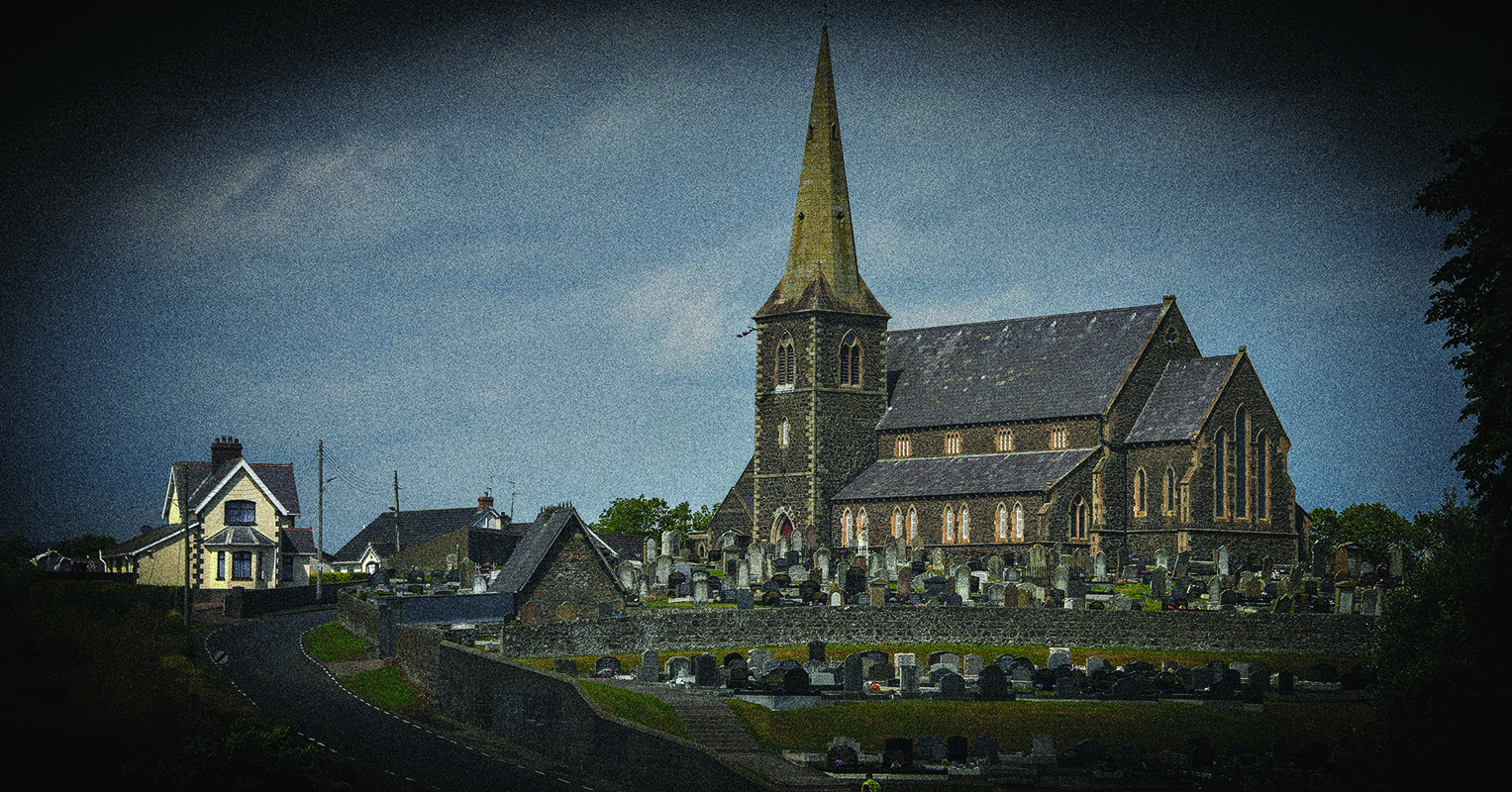
After a two-week-long stand off in Drumcree, Secretary of State Chris Bryant was forced to reverse the Parades Commission’s decision and ban the Orange Order from marching down the Garvaghy Road.
An important victory for the nationalist residents of the area was won not through political manoeuvring at Stormont, not through clever arguments in the courts, not through the office of the First Minister – and most certainly not through the benevolence of the Labour administration – but through mass mobilisation on the ground.
But the repercussions of Drumcree have extended far beyond Portadown itself.
Turmoil in the DUP
The DUP seemed poised to emerge as one of the main political beneficiaries of the standoff. Here was an opportunity to rally the unionist vote and deflect attention from the party’s failures at Stormont by whipping up a sectarian culture war. The opposite has instead happened: Drumcree has brought the DUP’s impossible position into sharp relief.
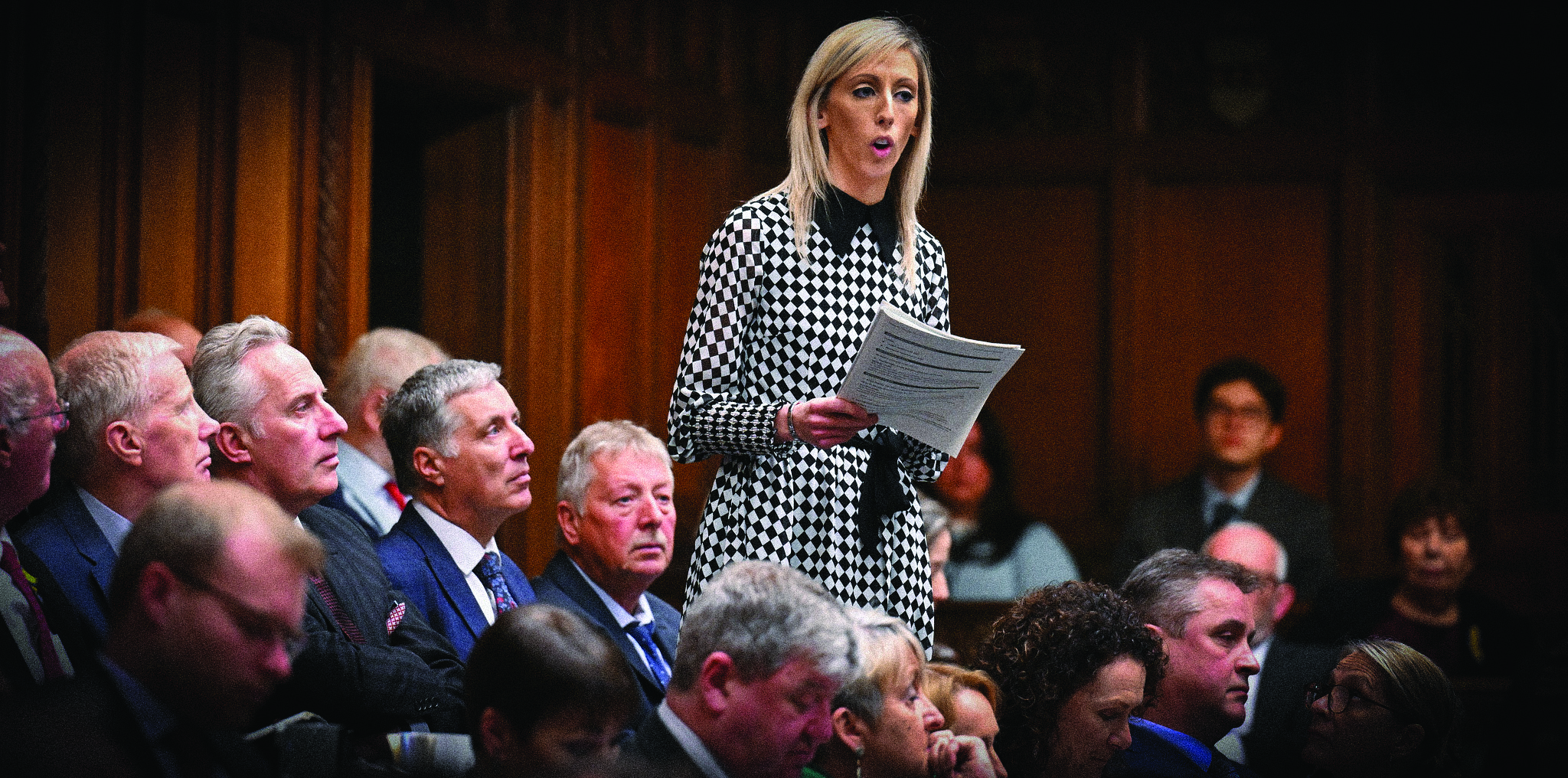
At the centre of the crisis stands Carla Lockhart, MP for Upper Bann. Sensing an opportunity to propel herself to the forefront of unionist politics, this unprincipled opportunist has suddenly discovered that she has been at odds with the DUP leadership for years.
“There is only one credible option and that is to remove the First Minister,” Lockhart wrote in an open letter to the DUP. She has since left the party. This alone constitutes a heavy blow for a party whose number of MPs has shrunk from ten to five in a decade. And yet, at this stage, it appears to be the least bad outcome for the party.
Gavin Robinson has so far resisted calls to withdraw Deputy First Minister Emma Little-Pengelly from the Executive – and hence eject Michelle O’Neill for the ‘crime’ of spending a few hours on the Garvaghy Road. Yet a slight majority of DUP voters (53 percent) believe that this is precisely what the party should do. Robinson is therefore presiding over a divided house, with the risk of losing support whichever way he turns.
Flanked on one side by the UUP, on the other by the TUV – and with Lockhart wielding the knife – Robinson is attempting an impossible balancing act. The polls offer little comfort. Lockhart is already more popular among DUP voters than the party leader himself, enjoying a nine-point advantage in net favourability.
At the time of writing, a week remains before the next opinion polls are published. These could prove decisive for the party’s future. If the DUP cannot reverse its fortunes, its internal tensions could erupt into an open crisis.
The future of what was once the mighty colossus of unionism is looking increasingly shaky.
Wither the North?
In her letter, Lockhart reaches back to 2007, when the DUP first entered power-sharing with SF. This followed the latter’s acceptance of the St Andrews Agreement, its recognition of the PSNI, the disbandment of the IRA, and its commitment to uphold the “rule of law”. The foundations for power-sharing on these terms, Lockhart argues, “simply cannot be said, with any credibility, to continue to exist.”
Admittedly, there is an element of truth in this – although not quite in the way Lockhart intends.
The war on parading is not going to remain confined to Portadown and tensions have already spilled over the Waterside area of Derry. Short of collapsing the Executive, the DUP has now committed to end all engagement with the First Minister. Lockart’s challenge to the party leadership, the deafening clamour from the more extreme wings of unionism, and elections just a few months away can only serve to further inflame tensions.
If the DUP is eventually pushed to collapse the institutions – on the ground that O’Neill is a ‘law-breaker’ and the IRA somehow still calls the shots – what then will be the prospects for restoring Stormon? It could very well remain collapsed for a long time.
As we predicted at the beginning of the standoff, SF is experiencing a bump in popularity thanks to the deafening hysteria emanating from the unionist camp.
But it is precisely the party’s own strategy that led us to the dead end we are in now. Their electoral successes – far from bringing us closer to a United Ireland – were not even able to defend the residents on the Garvaghy Road from Orange harassment. Their commitment to making Stormont work, so as to prove to the ruling class that they can manage the North, now lies in tatters.
But how have the events at Drumcree affected the consciousness of workers and youth? One would have to admit that the picture that emerges from the last opinion polls is complex.
On the one hand, the majority perceive the main divide in society to be not between rich and poor (down from 22 percent in June to 19 percent now), but between unionists and nationalists (up from 35 to 50 percent). This is precisely the role that sectarianism plays: it blurs the class divide in society.
On the other hand, the main concerns occupying workers remain the cost of living (59 percent) and the state of the health service (47 percent). These are unmistakably class questions.
Indeed, it is precisely this reservoir of class anger that – in the absence of a genuine revolutionary alternative – the likes of Lockhart and co. can exploit to further their own careers.
Their arguments about being ‘under siege’, about an ‘unfair settlement’, and so on, resonate with a layer of workers from a Protestant background because they capture something of their own experience: that their lives are getting worse. Only, of course, it is not the ‘mob’ on the Garvaghy Road responsible for this, but the ruling class.
The fallout from Drumcree should serve as a reminder to revolutionaries across Ireland. The reality is that only a clear-cut socialist programme can drive a decisive wedge between unionist workers and their opportunist so-called ‘leaders’.
The opportunities to build an organisation fighting for such a programme are clearly present in the North. But in its absence, the most extreme wings of loyalism and unionism will continue to find fertile ground in which to grow.