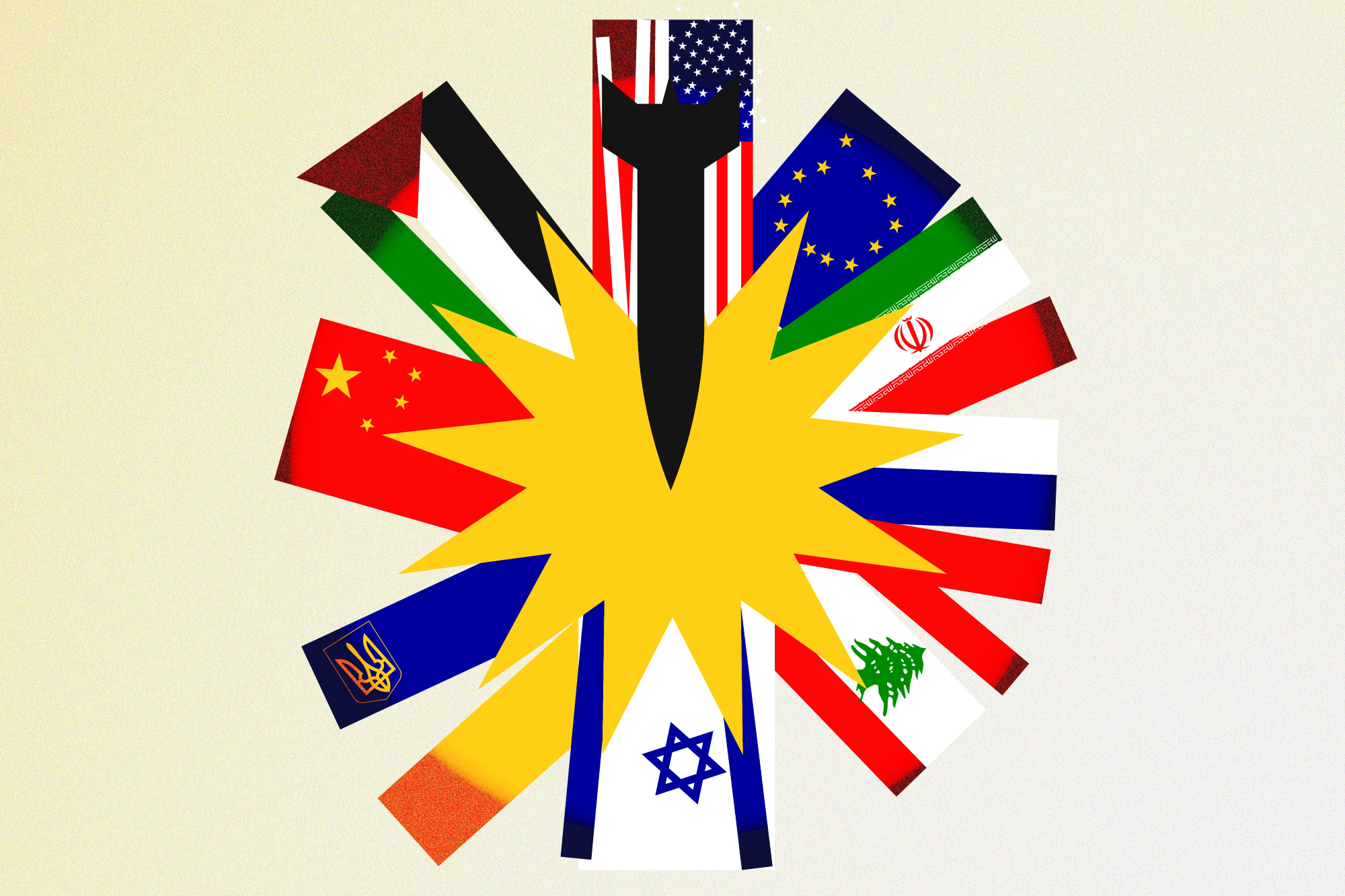
The AI boom that’s bringing eye-watering earnings to tech giants means growing precarity for workers across the sector. Most recently, TikTok has announced plans to lay off 667 workers in Ireland. Meta has already cut 40 percent of its Irish workforce since Covid.
The AI boom demands trillions in investment for data centres and chips. But that money has to come from somewhere and it’s not executive salaries or bonuses that are facing the chopping block.
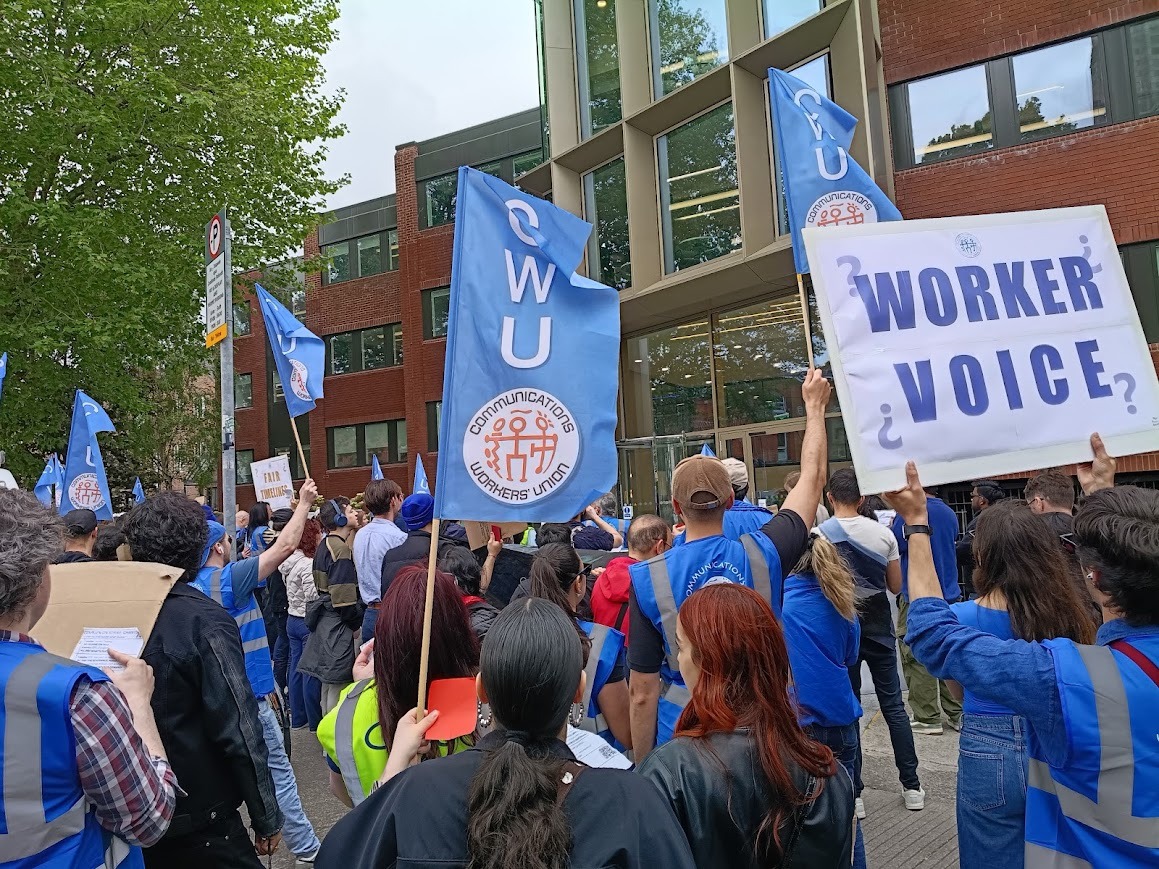
Workers at outsourcing company Covalen, organised under the Communication Workers Union (CWU), have paved the way by taking up the fight against AI-related lay-offs in their company. The South Dublin branch of the Revolutionary Communists of Ireland supported and enthusiastically participated in the strike.
It’s clear that the lay-offs seen in the tech sector so far are only the beginning. Tens of thousands more jobs are at risk. A discussion is urgently needed within the labour movement about how these attacks can be fought and what lessons can be drawn from the recent Covalen strike. This article is intended as a contribution to that discussion.
Tech workers fight back
For months, Covalen workers have faced successive cuts to benefits alongside intensified productivity demands. When the company announced that 720 workers would lose their jobs, most of them without redundancy pay, it proved to be the final straw.
This wasn’t the first round of lay-offs either. Last November, Covalen announced 300 redundancies, though not all of those went ahead. Covalen realised that mass lay-offs would mean a direct confrontation with the workers, so they chose to bide their time.
In January, the CWU led two days of strike action, demanding union recognition and improved redundancy terms. Although these demands weren’t won, the strike demonstrated a willingness to fight and helped the union double its membership within Covalen. It now stands at roughly 30 percent of the workforce, far more than elsewhere in the Irish tech sector.
Once a new round of 720 lay-offs was announced in April, the CWU launched a new strike. For three weeks, around 300 workers fought defiantly against Covalen. During the strike days, some departments were effectively shut down. This struggle, one of the first of this kind in the Irish tech sector, has undoubtedly made its mark on consciousness.
But despite the tremendous resolve demonstrated, the strike unfortunately did not achieve its aims and Covalen has started carrying out the redundancies. According to Ireland’s so-called ‘voluntary industrial relations system’, a workplace could have any number of workers unionised, and the boss can still flatly refuse to negotiate with the union. This is just what Covalen did. With this in mind, we have to ask what it would have taken to force the bosses to the negotiating table.
Lessons
The power of the working class comes from its ability to shut down production. Unfortunately, the Covalen strike stopped short of this. Instead of an indefinite work stoppage until the demands were met, it took the form of a one-day weekly strike over the course of three consecutive Fridays, the day when offices are least populated anyway. The bosses were easily able to wait this out.
At the final picket, leaflets were distributed to passersby, linking the struggle to that of workers in the wider tech sector. The leaflet specifically called on workers in Meta, which had itself announced 350 lay-offs around the same time, to follow the example set by the Covalen workers.
We believe this was a step in the correct direction, but it is a case of too little too late. Had the CWU reached out earlier to workers in Meta and other tech companies facing lay-offs, urged them to ballot for strike action and assisted them in doing so, then these workers could have struck in tandem. The message should have been: ‘You’re next, so don’t let us fall alone’. Those are the methods James Larkin used to build powerful class solidarity that put the fear of God in the bosses.
An indefinite strike at multiple companies in the tech sector, the crown jewel of the Irish economy, would have forced the bosses to the negotiating table. Whether or not they choose to recognise the union, they would have to recognise the acute pain to their balance sheet. What’s more, seeing this is a struggle that can actually win, many non-unionised workers would refuse to cross the picket line and would join the strike.
But perhaps most important of all, notably absent from the CWU’s list of demands was the withdrawal of the 720 planned lay-offs. If Covalen thinks it can reduce its workforce by using AI tools, then the union should be demanding that the work be divided out evenly with no loss in pay and without a single lay-off! Instead, the demands advanced by the CWU accepted the job losses as a fact, and only tried to negotiate their terms. That is like engaging in a battle with the intent of losing it! It is a testament to their willingness to fight that so many workers joined the strike despite this conservatism.
In truth, the mildness of the demands goes hand-in-hand with that of the tactics. If we aren’t going to shut down business for Covalen, then it follows that we have to be ‘reasonable’ in our demands. But being reasonable like this only weakens the strike. You inspire more workers to join the struggle by raising their sights about what can be won if we all fight together!
Unfortunately, all of these mistakes made the strike almost doomed to fail from the start. We have to be honest; An opportunity was lost in Covalen. This could have been a cause célèbre for the labour movement against the coming AI onslaught. Instead hundreds of workers are getting the sack, and the tech bosses will feel emboldened to implement even more cuts.
Artificial intelligence
It’s estimated that 63 percent of jobs in Ireland are in “highly AI-exposed occupations”. That means higher unemployment and deskilling are on the order of the day – which will mean worse wages and conditions even for those who keep their job, as they will become easier to replace.
The only solution is for AI to be implemented under the control of workers. Who knows better than tech workers which tasks can and cannot be effectively delegated to AI? Meanwhile, the labour time which can be reduced by using AI tools should translate into a reduction of hours at no loss in pay.
If tech workers shut down production across the sector, they would be negotiating from a position of real strength. With these militant methods, they could demand a total freeze on lay-offs, as well as the introduction of AI into the workplace only under the control of the union. It’s not going to be easy to build for a strike like this, but it’s the only way to ensure the burden of AI implementation is not placed on the shoulders of workers.
If such a powerful example was set by tech workers, it would be a matter of time before it’s followed in other sectors. The cost-of-living crisis is grinding down all workers, creating the potential for a general struggle across the working class. Such a movement could demand the scrapping of anti-union laws like the Industrial Relations Act 1990.
It is due to the very nature of capitalism that the same tech boom which crowned Elon Musk as the world’s first trillionaire is also leading to sweeping attacks on the conditions of tech workers. But armed with a militant programme for struggle, tech workers can make the bosses pay.