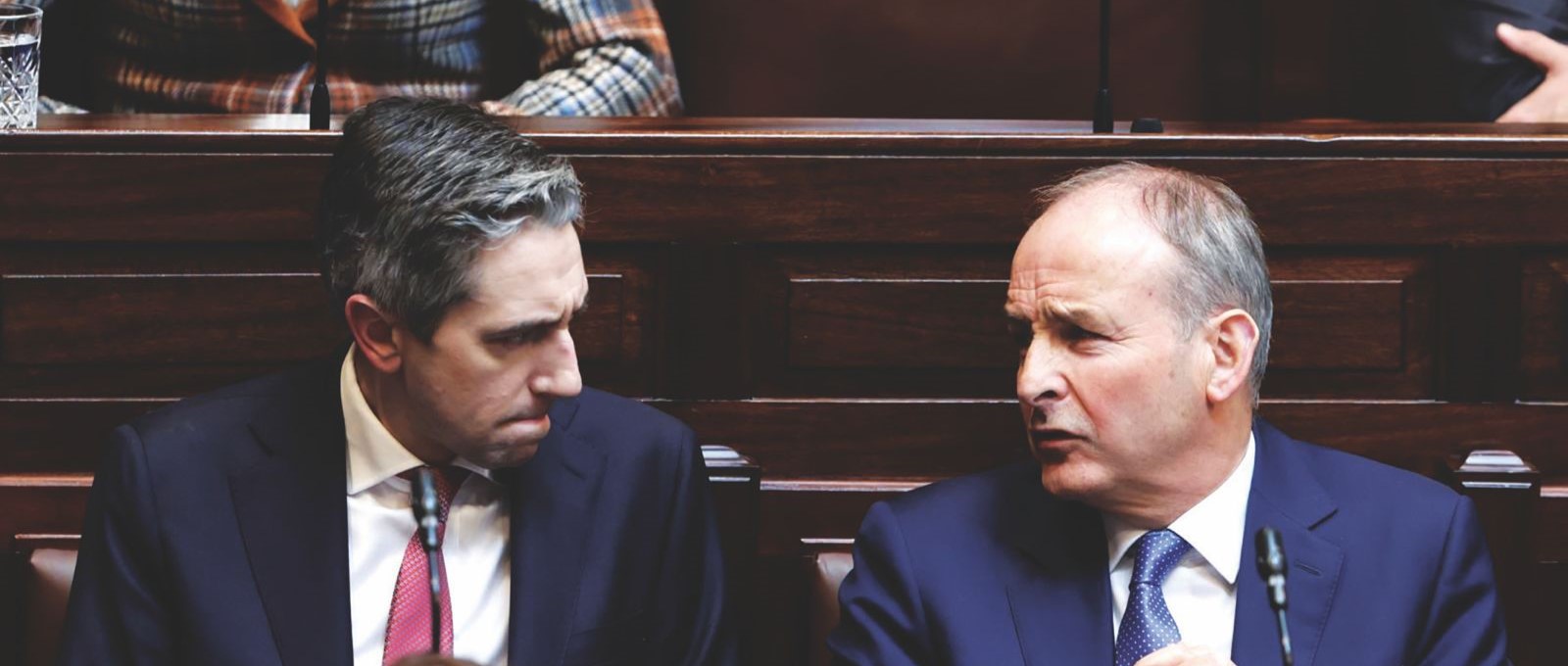
The Fianna Fáil-Fine Gael government once again goes on the attack against migrants. Their goal is to convince native Irish workers that immigration is the main cause of their declining living standards… and that the government is doing everything it can about it.
According to new rules, migrants wishing to become naturalised Irish citizens will have to reside in the country for eight years instead of the current five. Being in receipt of certain social welfare benefits during this time will make them ineligible. Prospective citizens will also need to prove proficiency in English or Irish.
The message is clear. Céad míle fáilte for wealthy migrants, whereas poor and working-class immigrants will see every barrier erected to prevent them from accessing the basic rights that come with citizenship.
Ukrainian refugees
It’s no coincidence that this is being brought in just as the Ukraine War approaches five years, meaning some Ukrainian refugees would soon become eligible to apply for citizenship under the old rules.
Minister for Justice, Home Affairs and Migration Jim O’Callaghan even said explicitly that under the new regulations, time spent in Ireland under the Temporary Protection Directive – the provision which has allowed Ukrainian refugees to reside in Ireland – will not count towards the eight years. And in a particularly cynical move, these standards will be applied retroactively to Ukrainians who have already lived and worked in Ireland for years.
There’s little room left for doubt about the utterly cynical manner in which Ukrainian refugees have been used as political loose change. When it suited them, the ruling classes of Europe waxed poetic about our duty to those fleeing ‘Putin’s evil war’. Irish workers were told to open their homes to Ukrainian families.
This was all part of the political theatre intended to portray the inter-imperialist war in Ukraine as a noble, humanitarian endeavour on the part of NATO. And Ireland, being unable to directly contribute to the war effort militarily, showed its alignment by taking in an exceptional number of Ukrainians.
But now that these refugees have served their purpose, they are simply tossed aside while the West continues to prop up the corrupt Zelensky regime prolonging a war that ravages Ukraine with no chance of victory – all the while it is Ukrainian workers and youth who are ruthlessly used as cannon fodder.
O’Callaghan’s crusade against Palestinian students
These changes to citizenship eligibility are only the latest performative attack on migrants by the government. In June, substantial parts of the EU Migration Pact were transposed into Irish law. This has resulted in a new ‘fast-track’ system for processing asylum applications – in reality a system to fast-track rejections of asylum.
Since the new system has come into force, 90 percent of asylum applications have been rejected. O’Callaghan boasted that applications had already halved within two weeks of the new law.
For O’Callaghan, appearing tough on migration serves his careerist ambitions of leading Fianna Fáil out of its present rut and into a new right-wing-populist era of renewed vigour. His recent vote against a Sinn Féin bill supported by his party leader to remove the mandatory three-day wait for abortions should also be understood in this light.
Similarly, there was the outrageous decision by O’Callaghan’s department not to review 103 rejected visa applications by Palestinian students with university places in Ireland. This weasel prefers to leave a hundred young people in the middle of a genocide than show any sign of weakness in ‘enforcing Ireland’s borders’.
The decision is even more blood-boiling if we look at the stated reasons for these visa rejections: insufficient documentation, gaps in education and employment history… and insufficient evidence for intention to return to Gaza.
Will stronger borders raise wages?
In a recent podcast, pop-economist David McWilliams articulated the demagogic argument used to convince workers of the need for stricter immigration laws. Here’s what we can expect apparently if migration is reduced:
“There will be a significant increase in wages on the lower end because the demand for those kitchen porters, for those chefs, for the agricultural workers will mean that, rather than paying for three or four more fellas coming in on minimum wage, the farmer has to pay the original fella, whoever he is, twice as much and his wages will go up. As a result of that, the wages of all working people will rise.”
The capitalist class indeed uses migrant labour to drive down wages. As one ESRI researcher put it, speaking about migrant workers in the ‘90s and 2000s, “they helped to sustain that Celtic Tiger period because otherwise we would have had wage inflation.” For all the ruling class’ attacks on migrants, it’s capitalism itself that needs immigration.
By bringing in desperate workers who are accustomed to lower living standards, the bosses can undercut the wages of all workers. This serves the additional purpose of fomenting discontent towards migrants who are seen as the reason for low wages, creating boundaries to workers’ collective struggle for their shared interests.
But tighter immigration controls do not raise wages. On the contrary, they make it harder for migrants to go on strike or get organised by rendering their residency status more precarious. This makes them super-exploitable and more useful for driving down general wages – quite the opposite of Irish workers being paid “twice as much”.
The only real alternative is for workers to overcome divisions of race and nationality and fight together for better conditions. In this way, it becomes impossible for bosses to use migrant labour to depress wages.
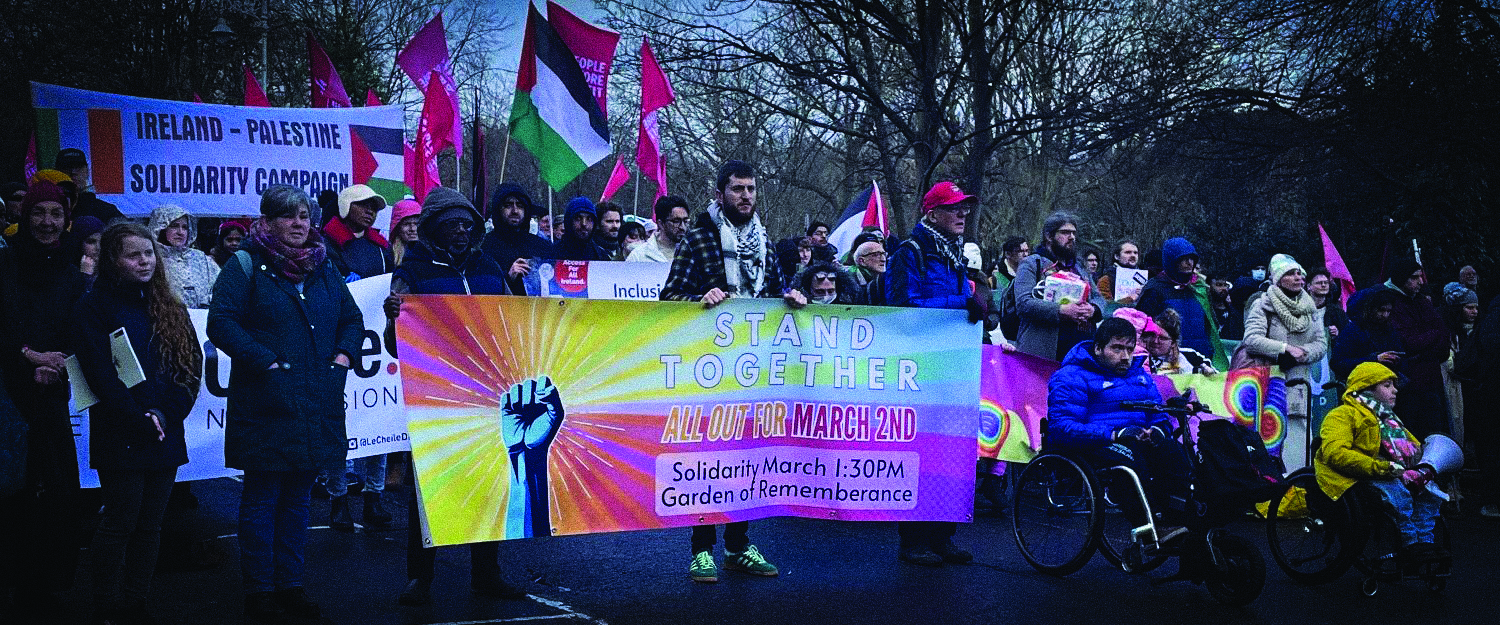
This is why Marxists fight against the cynical attacks on migrants by the ruling class and for working-class unity. The only path forward lies in collective struggle by native and migrant workers side-by-side against their shared enemy – the bosses, landlords and their political representatives in Dáil Éireann.