The cold air of Winter that’s creeping into working-class homes costing a fortune to heat is in sharp contrast to the rapidly rising temperature of the class struggle across Europe.
In Spain, President Sánchez has announced snap elections in response to militant housing protests. French school students and trade union militants are meanwhile fighting against riot police.
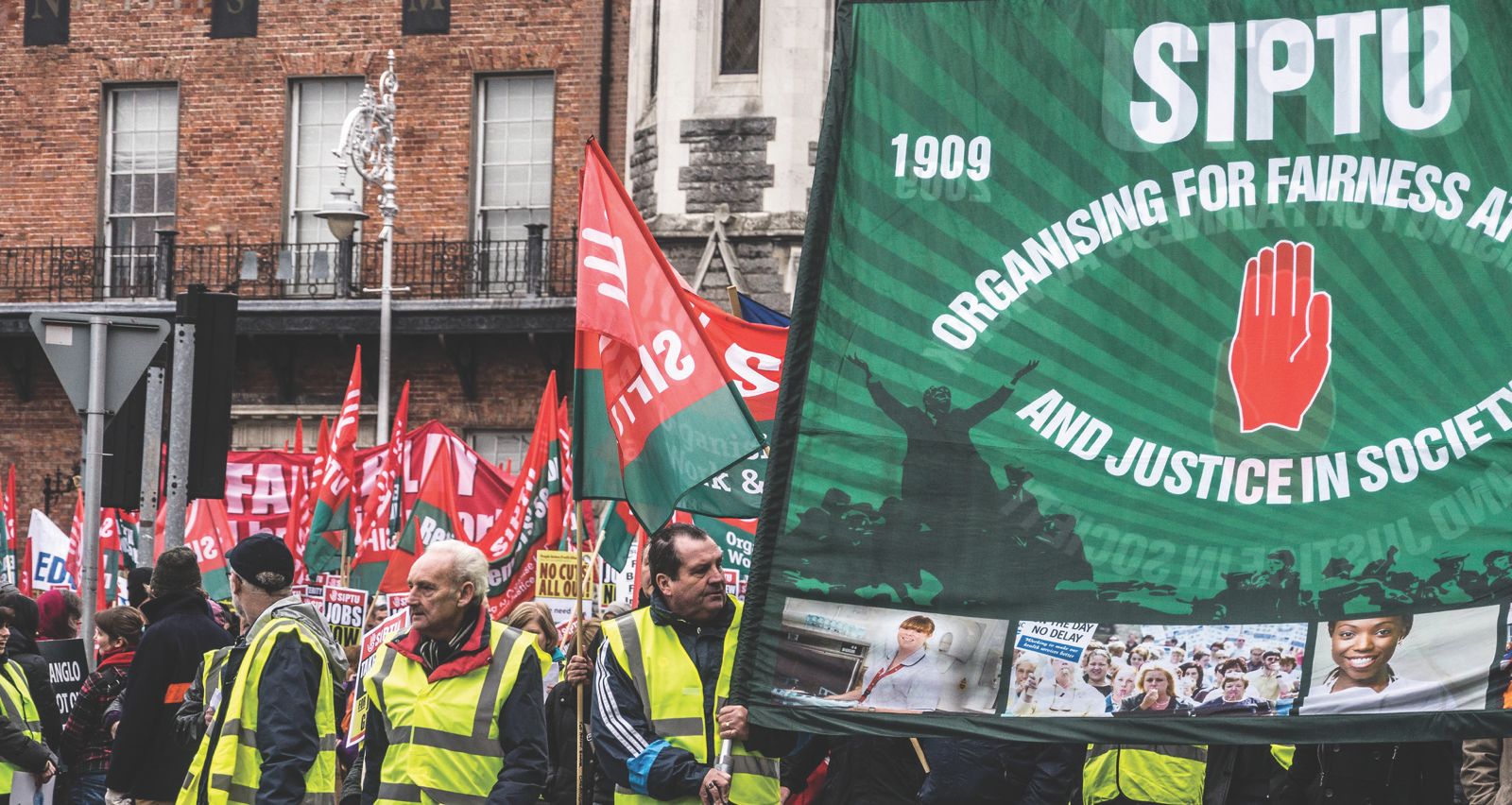
Ireland might seem tranquil by comparison. And yet, in just a few days on 14 October, over 300,000 public sector workers are set to down tools in the biggest day of strike action Ireland has seen in at least 17 years – with a threat to follow this up on 21 October.
In this context, it might seem the Irish government – whose two coalition parties are polling at just 17 and 18 percent respectively – would be mad to announce a budget that reneges on promises, leaves workers’ living standards trailing behind inflation, and makes minimal accommodation for a public sector pay deal.
But despite the looming spectre of class struggle and another year of record corporation tax receipts, it’s not so easy for the ruling class to spend its way to class peace.
In fact, the budgetary watchdogs and liberal commentators have been far more scathing in attacking the budget than the trade union leaderships have. Not for leaving workers worse off than they were a year ago, but for spending too much in the face of mounting economic volatility.
In these conditions, Fianna Fáil and Fine Gael attempted the impossible with Budget 2027: to balance between the needs of Irish capitalism and the mounting anger of workers and youth squeezed by years of inflation. As the Irish Times put it, the government is “buying the peace by pouring fuel on the fire”.
That’s certainly what they’re trying to do anyway. We don’t suspect they will succeed.
A surplus for how long?
Across Europe, deficit budgets and austerity are on the order of the day.
Ireland is an outlier, forecast to record a budget surplus of €6.7 billion for 2026 and €9 billion for 2027. What makes Ireland unique are windfall corporation tax receipts, mostly collected from a small number of tech and pharma multinationals. Without them, there wouldn’t be a €6.7 billion surplus for 2026, but a €12 billion deficit.
These windfalls give the ruling class some wriggle room compared to their counterparts in Europe. But by spending this money now, they know they’re only kicking the can down the road.
Baking these windfalls into current expenditure means that once they dry up – as they inevitably will – the Irish ruling class could very suddenly be in a position of needing to implement brutal austerity in an effort to balance the books.
Inflation fueled by the oil crisis remains persistent, while borrowing costs for some of the biggest economies in the world are reaching levels unmatched since the Financial Crash. This means a crisis that would have terrible effects on Ireland’s tax windfalls could be on its way sooner rather than later.
This is why economists are pouring scorn on the government for increasing spending by €8.5 billion, instead of implementing cuts now and putting more money aside for the coming rainy day – which could well be a tsunami.
The problem for the government is that even before the windfalls disappear, rising costs mean it needs greater spending – and therefore greater tax intakes – just to keep still. As the Irish Times put it:
“It takes a giveaway budget of €8.5 billion just to more or less stand still. […] A budget that only increased spending by, say, €5 billion would feel to many people, inside and outside Government, like an austerity budget. And this Government would almost certainly not survive an austerity budget.”
And so, year after year the budget keeps growing, taking Irish capitalism ever closer to the abyss.
Has the government bought ‘peace’?
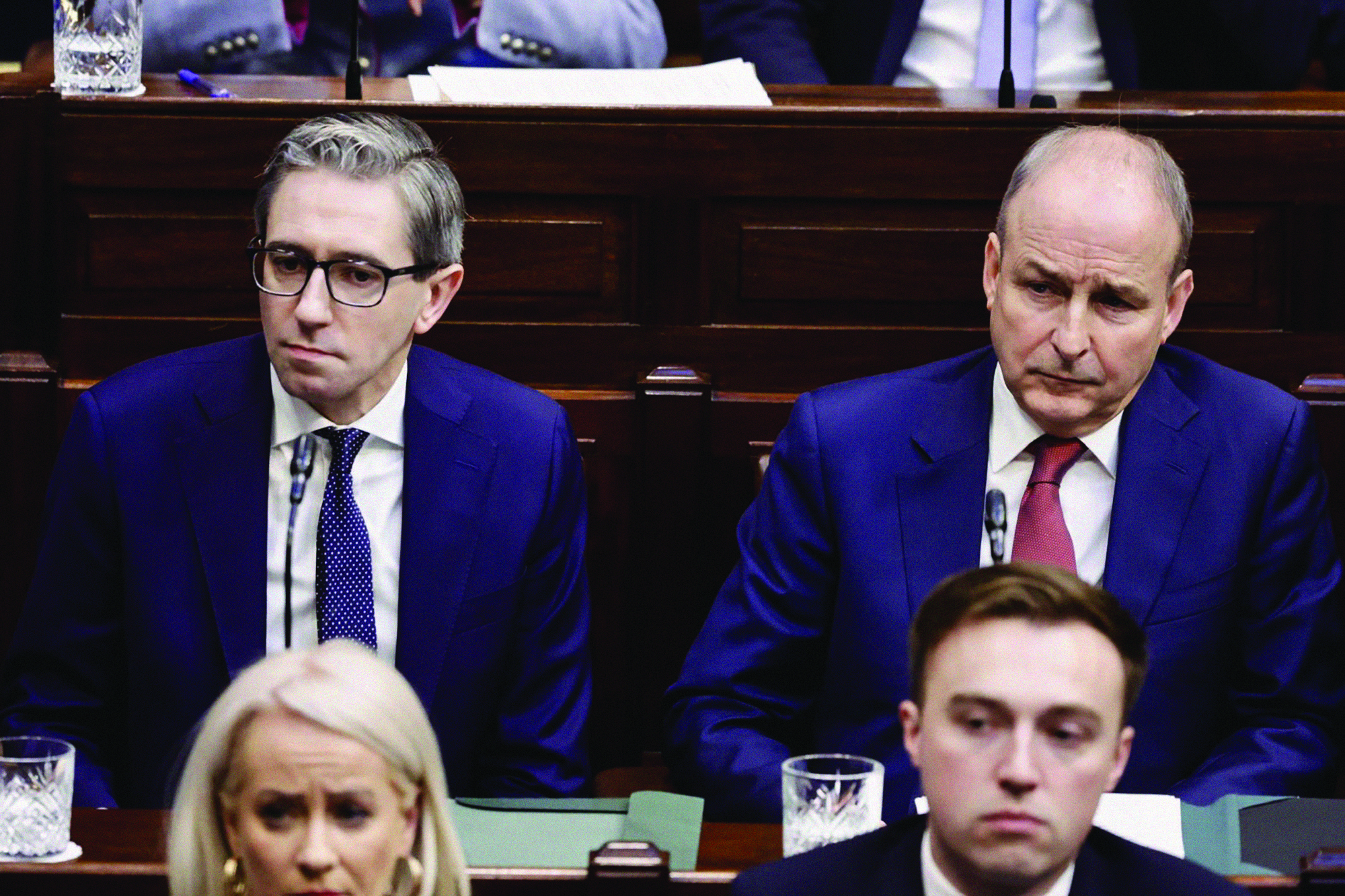
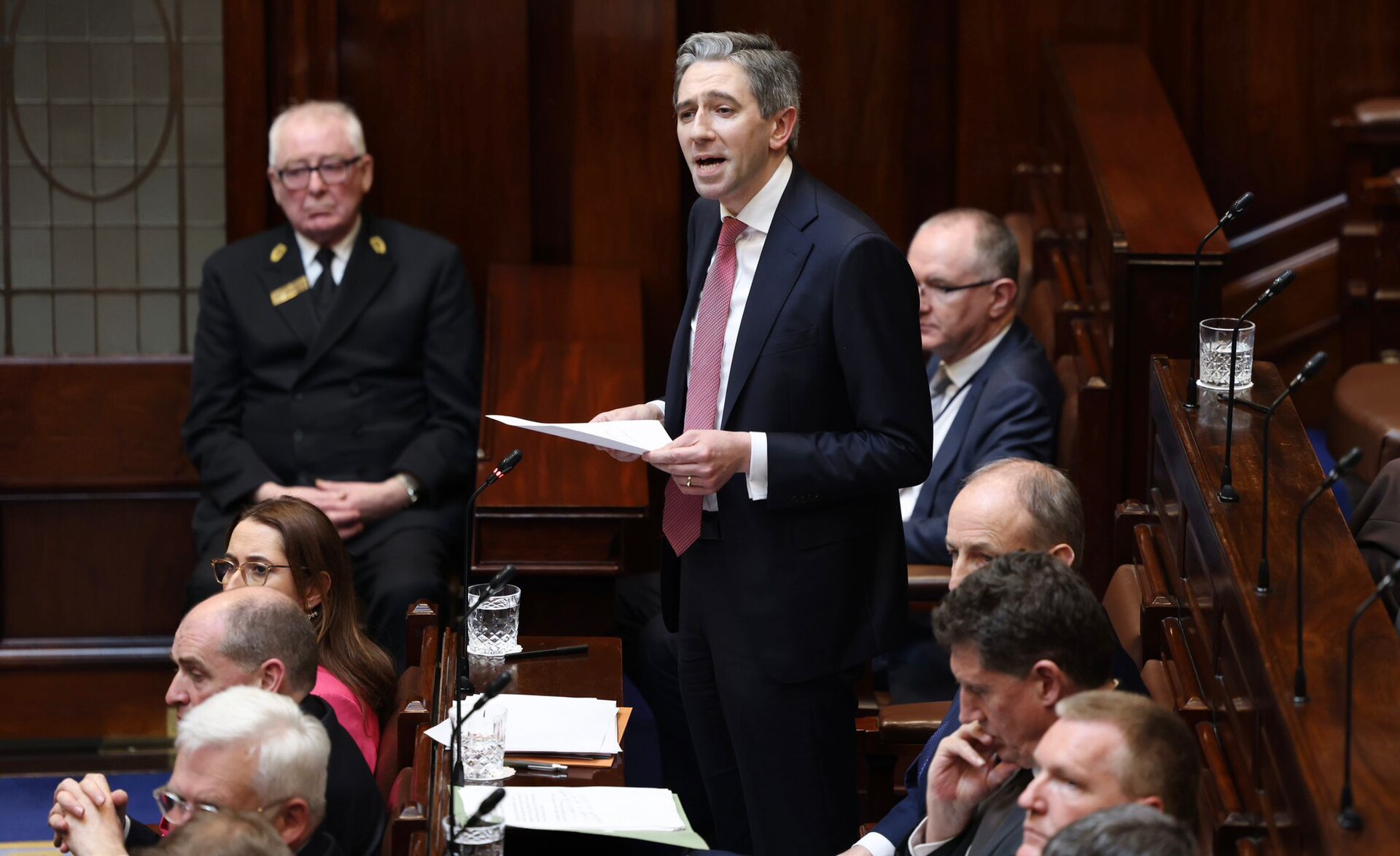
But while upsetting fiscal watchdogs, are the government’s spending plans going to win any renewed support with the working class and quash the threat of industrial action? After all, Simon Harris had said this would be a budget for people “who get up early every morning and go to work”.
But the reality is that with ballooning living costs, this €8.5 billion will hardly make a dent for the vast majority of the working class.
Budget 2027 includes an increase to the 40 percent bracket on income tax, ‘making up’ for freezing tax brackets last year. It’s estimated that middle-income earners will ‘benefit’ by about €500.
This is a drop in the ocean for workers already battered by rising costs. Since September 2025, energy prices alone have increased by 15.3 percent, mortgage interest costs have risen by over 10 percent, and just about every other expense facing ordinary people has gone up too.
Meanwhile low-income workers who don’t qualify for the higher bracket won’t benefit from the income tax adjustment whatsoever. Changes to USC, childcare costs and welfare payments will do very little to compensate for spiralling costs.
But fear not. There’s also a 9 percent increase on ‘defence’, cuts to capital gains tax and exit tax for investors, and new tax credits for research and development.
So much for Harris’s promise of a “workers’ budget”.
Simply put, the government is now facing the worst of both worlds. Neither the capitalists nor the workers are happy with the budget – the former because they are spending too much, the latter because they are spending too little.
In this context, the question of the public sector pay deal is providing something of a lightning rod for years of accumulated frustration and anger at the government.
Public sector pay
While announcing €1.2 billion set aside for public sector pay rises and pension contributions, Jack Chambers took time out of his budget speech to address ICTU directly.
“This demonstrates my seriousness, and indeed the seriousness of Government, in our desire to reach a new agreement that responds to the issues that have been raised. I would now call on ICTU and other associations to match this intent by re-engaging as a matter of urgency and standing down the ongoing industrial action.”
We don’t doubt for a second the government’s seriousness about their desire for industrial peace. But this does not seem to be translating into “seriousness” about giving public servants a pay deal that allows them to remain above water.
Indeed, public servants have already been taking brutal cuts to their purchasing power. Over the past five years, their real pay has fallen behind inflation by at least 5 percent, with some estimates putting it as high as 7.5 percent!
Responding to the €1.2 billion budgeted for increased expenditure on public sector pay, SIPTU Deputy General Secretary Adrian Kane commented, “The net amount [pay increase in 2027] could be under 3 percent at a time when the CPI [inflation] for September was 3.9.”
So Chambers and Harris are pleading with the unions to call off the upcoming strike, but they still think public sector workers should take a pay cut!
The unions meanwhile have said they won’t negotiate the details of a deal until the government commits to indexing public sector pay to inflation. That’s the bare minimum that would be needed to protect wages from future inflation, without even making up for the cuts already dealt to real pay in recent years.
The stage is therefore set for 14 October.
14 October
The unions have said they’re not backing down from the 14 October strike day. This is entirely correct, and class-conscious workers and youth all around Ireland should come out on the day to support the striking public sector workers.
This government has attacked workers’ living conditions for a decade and more now, and we should accept nothing less than a pay deal guaranteed to be above inflation.
However, we have to ask, will one day of action (with the threat of a second day a week later) be enough to wrest serious concessions from the government?
Unfortunately, it seems that the trade union bureaucracy is more concerned with containing the anger of the working class rather than spurring on a militant fight against Fianna Fáil and Fine Gael.
A statement by the ICTU Public Services Committee illustrates their reasoning:
“Union members are unlikely to be persuaded by the minister’s call on unions to enter talks, while the provision of €1.2bn does not suggest the Government is prepared to negotiate a deal that workers could consider credible in current circumstances [our emphasis].”
They are stating it themselves. They’re not leading the strike because they’re eager to take up a struggle against the government, but because they know they haven’t the authority to sell workers on another sub-par deal.
The fuel blockades back in April undoubtedly had a profound effect on the consciousness of workers. Union members saw how quickly the government found over a billion euros to concede to the demands of farmers and hauliers on the basis of militant action. It’s no wonder that the union leaders think it won’t be possible this time to convince workers to accept another sub-inflation pay deal in return for renouncing their right to go on strike.
We have to be honest that we don’t have any trust in the current trade union leadership to lead a serious struggle for decent pay. After all, why was the strike scheduled for the week after the budget and not while the budget was being drafted? Why is the leadership of ICTU so concerned with showing the government they are operating in ‘good faith’ while the latter have most certainly not operated in good faith for the past 15 years and more?
Workers have returned ballots with an historic mandate in favour of strike action. Instead of hesitating, the union tops should have begun immediate preparations for a strike, involving workplace assemblies and rallies leading up to the action, to build support and confidence for the strike.
Furthermore, the reality is that the government can simply wait out a one-day strike. Therefore plans need to be put in place for a series of escalations if the government remains obstinate. This should go beyond just a second one-day strike on 21 October. Concrete plans are needed – for example, for a two-day strike, with plans to follow it up with a three-day strike if necessary and so on.
The union leadership should also organise an all-out campaign to build for the strike and respond to the mountain of slanders already being levelled against public sector workers by government figures and the entire commentariat.
Just last week, school secretaries and caretakers in Fórsa were finally balloted on a deal resulting from their strike in August 2025 (!) that was called off after just one week when the government made a “commitment” to negotiate with school staff. The deal falls short of what was demanded, but the leadership of Fórsa nevertheless recommended accepting it.
After the 14th, the union leaders might again try to call off subsequent strikes in return for a promise by the government to sit down at the negotiating table. Public sector workers should draw the lesson from the secretaries’ and caretakers’ strike to avoid getting the wool pulled over their eyes.
What’s next?
Fearing this very scenario where the working class is taking inspiration from the fuel blockades, the government, media and the union leaders themselves have all been engaged in a concerted effort since April to draw a defining line between the ‘hooligan’ methods of the farmers and hauliers, and the traditional ‘respectable’ and ‘gentlemanly’ conduct of the unions.
But this hasn’t been working. A recent poll by the Business Post found that 66 percent would support further blockades if the price of fuel keeps going up.
14 October is an opportunity to put in practise the methods and spirit of April 2026, but on a higher level. If a few hundred farmers and hauliers could have such an impact on ‘business as usual’, just think what a quarter of a million teachers, nurses, doctors, council workers, etc. could do by withdrawing their labour.
The overwhelming ballots in favour of strike action in all the major public sector unions speak to the immense willingness to fight on the part of workers. Serious concessions will not be won through clever deal-making behind their backs, but only by the workers themselves by their resolute struggle.
A victory for public sector workers will be a victory for all of us.