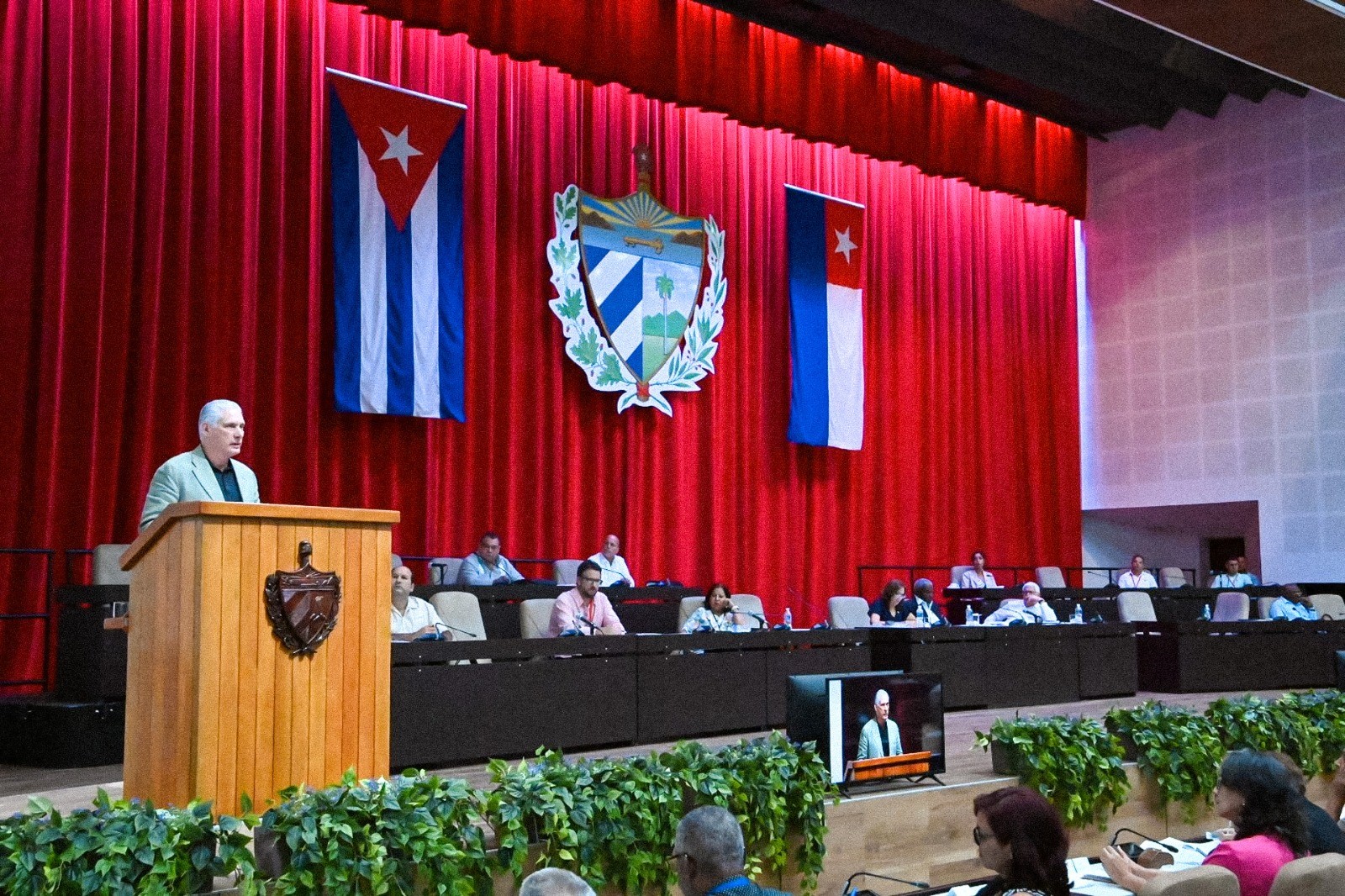
Faced with unbearable pressure from US imperialism, during an extraordinary session on 18 June, the Cuban National Assembly adopted a series of economic proposals. If implemented, these proposals will lead directly to the restoration of capitalism.
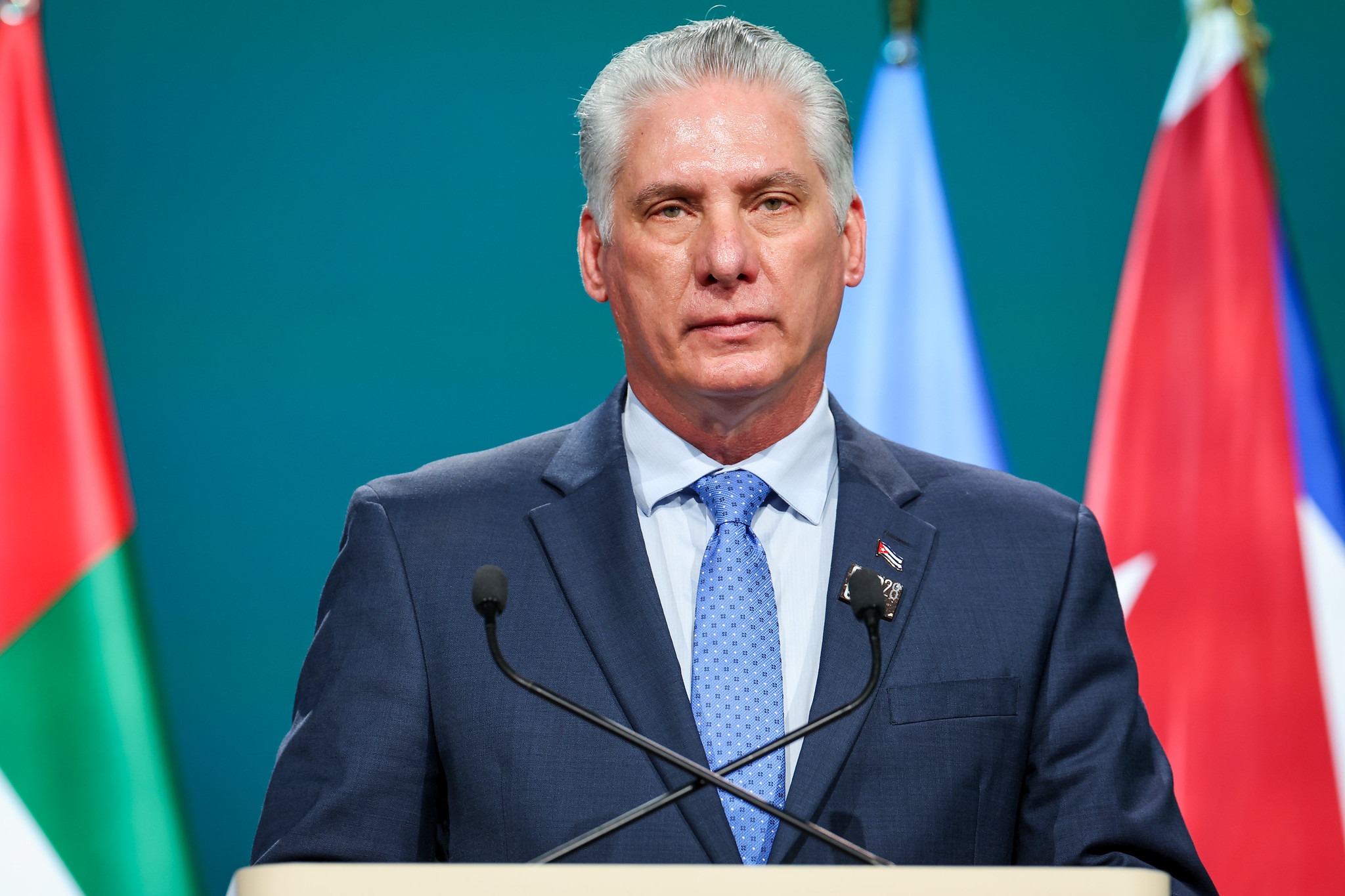
On Friday 12 June, at a morning press conference, President Díaz-Canel announced far-reaching economic reforms. On Wednesday 17 June, the plenary session of the Central Committee of the Communist Party of Cuba (PCC) met and, with unprecedented speed, the following day the National Assembly of People’s Power approved no fewer than 176 measures. Taken as a whole, these measures, if implemented, spell the end of the planned economy and the restoration of capitalism.
There is no other way to analyse the decisions taken. This is not a matter of a few reforms, nor of a partial opening up to the market. We are talking about nothing less than the complete restoration of a capitalist market economy in Cuba. A qualitative leap, not merely a quantitative one. And this will have very serious and historic consequences.
[Originally published on Marxist.com]
Capitalist restoration
Let us begin by describing the measures approved:
- The end of state planning of the economy, and the allocation of resources by the state to be replaced by “policy signals for all economic actors” (public and private) and the primacy of “market signals”.
- The end of the foreign trade monopoly.
- “Transforming socialist state-owned enterprises into commercial companies with shares or equity interests” and allowing private capital, both domestic and foreign, to purchase their shares.
- State-owned enterprises will have complete autonomy to decide their investment policy, their sectors of activity, their workers’ wages and the sale of their assets to the private sector; they will set their prices in accordance with costs, and those that do not turn a profit will be wound up.
- The creation of a private banking and financial sector.
- The unlimited expansion of sectors open to private investment, both domestic and foreign.
- Indefinite usufruct of land by private actors.
- The abolition of universal subsidies, which will be replaced by targeted support for vulnerable people.
- The relaxation of dismissal rules and the introduction of an unemployment benefit lasting between three and six months.
- “Carry out successive devaluations of the national currency to reduce exchange rate differentials. Companies unable to withstand the devaluation will be wound up.”
- Allow private companies to employ more than 100 workers.
- “Allow real estate firms to carry out sales and purchases of residential properties.”
- “Allow foreign investors to have full access to their foreign currency earnings, operate flexibly within an environment of partial dollarisation of the economy, and grant them access to the foreign exchange market.”
- “Allow all forms of business to operate in the Cayos, the heritage areas of Old Havana and Trinidad.”
- “Allow property development in all the country’s tourist areas.”
- “Invite fast-food franchises to invest in the country.”
These are just some of the approved proposals, which also include other serious aspects. I have included in the list only those that seem most significant to me.
Regardless of the intentions and words of those who took these decisions, in practice what we are talking about is the restoration of capitalism in Cuba.
Alongside the abolition of economic planning comes the conversion of state-owned enterprises into joint-stock companies, their subjection to the rules of the capitalist market, and furthermore the abolition of the foreign trade monopoly which acted as a barrier (albeit a partial and greatly weakened one, but a barrier nonetheless) against the pressure of the global capitalist market on the Cuban economy.
The proposals also state that all enterprises (state-owned and private) will be required to demonstrate ‘social responsibility’ – one member of the National Assembly said that private enterprises ‘are also socialist’! – and that the state reserves the right to hold a majority stake in enterprises in key sectors. In practice, none of this will matter. Capitalists do not act on the basis of a moral imperative towards society as a whole, but on the basis of the need to maximise profit; otherwise, competition will drive them into bankruptcy.
The private profit of a minority of capitalists, both domestic and foreign, will become the dominant motor force of the Cuban economy if these proposals are put into practice.
The approved measures were presented by both Minister Marrero and President Díaz-Canel as steps that would have been taken regardless of the latest escalation in the US offensive, and as part of a ‘perfecting and strengthening of the socialist model’.
It was also stated that these measures “untie the knot that was stifling the productive forces”… as if the problem were state ownership and planning, rather than the bureaucracy and the bureaucratic way in which planning is carried out.
This is perhaps the most serious issue. It could be argued that some of these concessions to the market were inevitable in the face of the unbearable pressure from imperialism in recent months, which has led to the almost total suffocation of the Cuban economy. But in that case, what must be said openly is that these measures constitute a serious and very dangerous step backwards, rather than praising them as a step forward or presenting them as a strengthening of socialism.
Amid this dizzying whirlwind of decisions, President Díaz-Canel also announced that he had called upon what he described as “critical” Cuban economists to advise on these measures. Among them are Omar Everleny and Triana Cordoví, who for some 20 years have been advocating, both within the Centre for the Study of the Cuban Economy and outside it, for the Chinese-Vietnamese path towards capitalist restoration. It is like putting the fox in charge of the henhouse.
In several speeches at the National Assembly of People’s Power (ANPP) and at Party Central Committee (CC) meetings, it was explained that the proposals arose “from the study of the experiences of other socialist countries”, that is to say, China and Vietnam.
To be clear, in China and Vietnam, the leadership of their ‘communist’ parties restored capitalism. In those cases, the process took decades; in Cuba, they want to push ahead in a matter of days and weeks.
The difference is that in China, capitalist restoration in a large country, with a huge reserve of cheap labour and a strong state, eventually led to sovereign development that has turned the country into a world power capable of challenging US dominance. China is a capitalist country, and the interests of a handful of billionaires, with close ties to the state apparatus and the misnamed Communist Party, dominate the economy and benefit from the exploitation of the labour of millions. But at least it is a capitalist country that determines its own policy and competes on the world market on equal terms with US imperialism.
Cuba is not in a position to replicate that process. We must speak plainly. The unrestricted and unchecked influx of foreign capital into Cuba’s fragile economy will very quickly lead to its complete domination and subjugation. The loss of economic sovereignty will be followed, sooner rather than later, by the loss of political sovereignty.
It is clear that there are many, even within the Central Committee and the National Assembly of People’s Power, who are wary of these measures, particularly because of the economic impact they will have. For example, at the meeting of the Party’s governing body, Miriam Nicado explained how the economic measures adopted “may widen disparities within the population”… “and may even lead to a greater concentration of wealth in certain sectors”.
Consequently, to bolster the proposals, a letter signed by Raúl Castro was presented, endorsing them. The full prestige of the revolution’s historic leadership – those who expropriated capitalism in order to fulfil the bearded revolutionaries’ promise of sovereignty and social justice – was thereby drawn on to justify the very opposite.
The brutal and cruel campaign of economic suffocation by the US
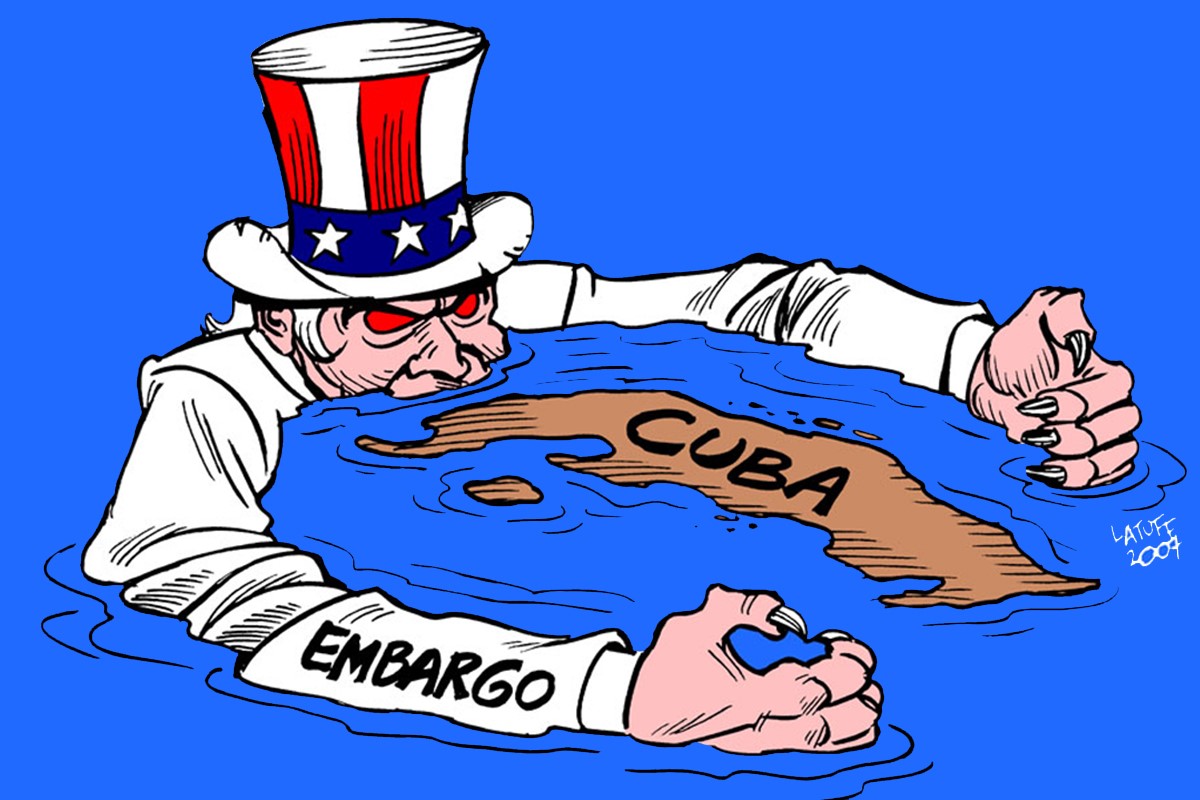
Despite claims that these measures are being taken of their own free and sovereign will, the reality is stubborn. The economic suffocation imposed by the US has reached unsustainable levels.
The oil embargo imposed in January is rapidly paralysing the country’s economy, causing power cuts lasting more than 24 hours, disrupting the transport of people and goods (including food), and affecting public services (including schools and hospitals). It is preventing the population from preserving the little food they can access, forcing them to cook with charcoal.
Marco Rubio has successfully threatened countries in the Caribbean and Central America into expelling Cuban medical missions, a crucial source of income.
Many airlines have suspended flights to the island due to a lack of aviation fuel (a result of the oil blockade), dealing a severe blow to tourism, particularly from Russia and Canada.
The secondary sanctions imposed by Rubio on 1 May forced the withdrawal of the Canadian mining company Sherritt International (which had partnered with a Cuban state-owned enterprise to mine nickel and cobalt); forced Indonesian, Turkish, Spanish and Canadian hotel chains to end their partnerships with the state-owned company Gaviota; led Visa and Mastercard to suspend their operations on the island; and forced European shipping companies Hapag-Lloyd and CMA CGM to suspend freight services. Even the retailer Envioscuba.com, which sends goods to customers on the island on behalf of their relatives in the US, has been forced to cease operations.
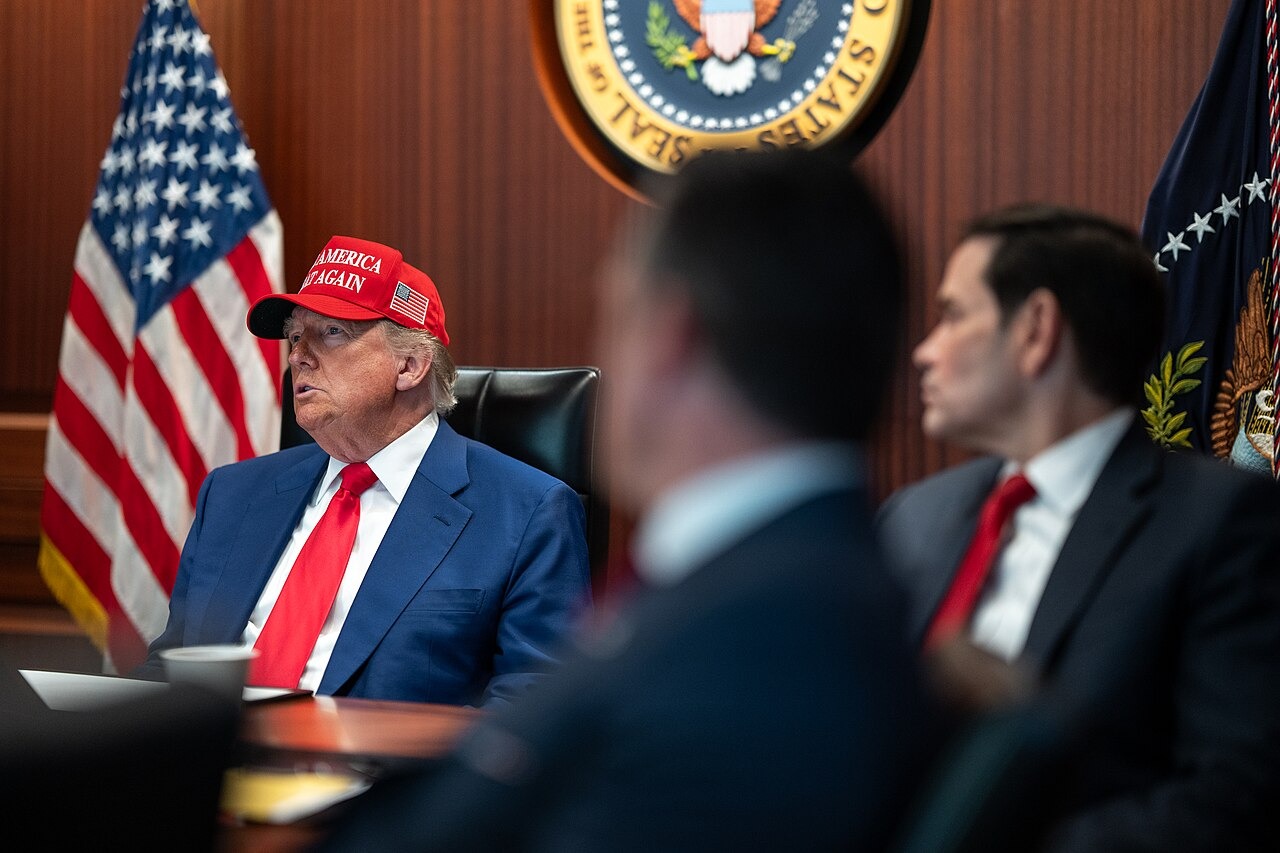
The criminal Trump-Rubio duo have systematically targeted all of Cuba’s sources of foreign currency: the export of medical services, tourism, remittances, mining… and have also cut off the energy supply.
Added to this unprecedented economic blackmail are the sabre-rattling by Trump and Rubio, the military threats – both overt and covert – and Hegseth’s ‘Rambo-style’ visit to the Guantánamo base.
The Chinese path to capitalist restoration… with American businessmen?
One possible explanation for these measures is therefore that the Cuban leadership has decided to restore capitalism whilst retaining political control (in the Chinese style) as a way of preventing imperialist military intervention and regime change, in order to negotiate the lifting of sanctions in return.
This would be in line with a series of recent moves and statements. At the end of May, the American businessman and Trump-supporting candidate for governor of Rhode Island, Vic Mellor, visited Cuba, “at the invitation of Cuban businesspeople”. During his visit, he met twice with Raúl Castro’s grandson.
“I got to meet with Raúl [Rodríguez Castro], and his vision for opening up Cuba with business, I align with it, I think Cuba needs it, I think the world needs it,” Mellor told AFP. “I think that it is time to move forward, it’s time for change, and Raúl believes this also.”
Heart-warming stuff.
The day after the National Assembly of People’s Power (ANPP) approved the restoration of capitalism – the Cuban people have not been consulted, and have barely been given any explanation – Raulito gave an exclusive interview to Abu Dhabi’s The National, calling for a “cordial relationship” with the US. He added that an agreement could be reached regarding compensation for Cuban-Americans for property expropriated by the revolution.
In the same interview, the Deputy Minister for Trade and Tourism, Carlos Méndez, addressed the US business community directly. “We want US businesspeople to know and understand that Cuba is a country open to investment… in sectors such as mining, tourism, property, banking and finance,” he stated. “There are differences between our governments that should not prevent the business community from participating in the Cuban economy.”
There are clearly differences between Marco Rubio and Donald Trump in their attitudes towards the Cuban Revolution. Both want to destroy it, that much is certain, but they differ on what the ultimate goal is. For Rubio, it is regime change and for the Cuban-American counter-revolutionary gusanos in Miami to take control. For Trump, it would probably suffice to gain control of the island and its economic resources, and to expel China and Russia, regardless of who is in charge at the beginning: the Venezuelan model.
One clue that has gone almost unnoticed. When Rubio’s secondary sanctions forced the Canadian mining company Sherritt International to leave the island, the firm – which relies almost entirely on its investments in Cuba – went under. At that point, a US company owned by a former adviser to the first Trump administration stepped in, offering to buy a majority stake.
What interest could a Texan investor possibly have in a Canadian company that has been left without business due to Rubio’s sanctions on Cuba? … unless he reckons he can obtain a licence from Trump to operate in Cuba! Such a deal, if completed, would mean that nickel and cobalt mining in Cuba would pass from Canadian control… to US control, at a time when US imperialism is racing to secure access to critical minerals.
Is it far-fetched to think that a similar operation might be in the pipeline in other sectors of the economy, including the tourism and hospitality sector?
Imperialist blackmail has already forced Spanish and Canadian multinationals to partially withdraw from the sector. Would the major US chains be willing to replace them? Or companies from other countries that are not rivals of the US? There is talk of a group from the United Arab Emirates that is interested in building a ‘Trump Island’ on Cayo Santa María (!!).
Be that as it may, whether it takes place through an agreement with a section of the state bureaucracy and the Communist Party in Cuba or by force, control of the Cuban economy by US business interests will mean the total loss of sovereignty.
We must reiterate what we have explained time and again. The conquests of the Cuban Revolution are founded on the expropriation of capitalism. If capitalism is restored, it will inevitably be impossible to sustain those conquests (which, although severely weakened by decades of imperialist assault, still exist).
Completing the process of capitalist restoration will undoubtedly mean greater social stratification, the accumulation of wealth in a few hands, and the emergence of a Cuban capitalist class that will use its economic power to eventually exercise political power. We are not talking about a handful of micro, small and medium-sized enterprises (MIPYMEs) with a dozen workers each, but about major foreign investors taking control of the profit-making sectors of the economy. Furthermore, the nascent Cuban bourgeoisie will be backed by (or rather, will be under the control of) the most powerful imperialist power on the planet, just 90 miles away.
With the destruction of the planned economy, all the gains of the revolution will be destroyed, including national sovereignty. A capitalist Cuba would find itself in a situation of semi-colonial subjugation to the US.
Was there any other alternative?
In Cuba, many revolutionaries and communists are well aware of the dangers and consequences of these proposals, despite the leadership’s insistence that this is a matter of ‘perfecting the socialist model’ and ‘changing what needs to be changed’ (cynically exploiting a quote from Fidel).
But opposition to capitalist restoration faces serious difficulties.
The first is the lack of a culture of decision making political debate within the Party and the state in general. In Cuba, there have been many consultations and referendums. 15 years ago, the economic guidelines were subjected to a very wide-ranging discussion, but in the end the decisions were taken from above without any direct participation by the working class in the process.
The second is the understandable reflex towards unity and closing ranks in the face of imperialist aggression. The ‘besieged fortress’ syndrome. To this we answer that during the negotiations for the Treaty of Brest-Litovsk in Soviet Russia, at a time of imminent military danger, the Bolsheviks organised a wide-ranging debate within the Party and the Soviet institutions. There were three opposing positions, and all of them used the state media and public meetings to campaign for their point of view. In the end, a decision had to be taken in haste.
During the 1960s, at a time of imminent military threat to the Cuban Revolution, many intense debates took place amongst revolutionaries – concerning the use of Soviet manuals, the economic model, the need for international revolution, and policy regarding art and culture. None of this weakened the revolution; quite the contrary.
Unity in the face of the enemy serves to defend the revolution, but unity with those who propose restoring capitalism is false, because it means acquiescing to a decision that in reality serves to undermine and destroy the revolution.
The third point is the lack of a clear answer to the question: ‘but what other alternative is there?’ This is the most important one.
It must be said that it is absolutely true that the situation is desperate. But it is important to speak plainly and call a spade a spade. What is in reality a very significant step backwards cannot be disguised with rhetoric about ‘strengthening the socialist project’. This was already done with the Ordenamiento economic reforms in 2020, and the disastrous consequences are plain to see.
Combat the bureaucracy with workers’ control
Concessions to the market may be (and are) necessary, but there is a huge leap from a few concessions to full capitalist restoration. This is a difference not of degree but of quality. Any concession to capitalism must be accompanied (as was the case with the NEP in Soviet Russia) by mechanisms of workers’ control and management of the economy and society.
Some of this is touched upon in the article by the Cuban economist Liu Mok, reproduced in the Cuban magazine Juventud Técnica under the title ‘Is There Another Alternative for Cuba?’:
“Recognising the need for transformation does not mean accepting that the only way forward is to progressively expand the scope for private capital accumulation or to convert state-owned enterprises into joint-stock companies open to new investors…
“It is striking that there is hardly any discussion of alternatives that would deepen the direct participation of workers and communities in economic management. The debate seems to oscillate between two extremes: maintaining rigid and inefficient bureaucratic structures, or ceding greater scope to private capital. Between these two lies largely unexplored ground…
“A different option would be to move towards forms of worker and community self-management. Instead of transforming state-owned enterprises into joint-stock companies where decision-making power ultimately depends on who holds the most capital, we could move towards enterprises managed democratically by their workers.”
In recent years, others have highlighted the need for workers’ control to combat bureaucracy. This is entirely correct.
International revolution to break the isolation
Furthermore, a policy is needed to push for international revolution, since ultimately the source of most of the problems threatening the revolution (including bureaucracy) is its isolation. It is not possible to build socialism in one country. It was not possible in Soviet Russia, which spanned an entire continent with vast material and human resources. It is even less so on a small Caribbean island 90 miles away from the world’s largest and most reactionary imperialist power.
It is noteworthy that, despite all the difficulties of the ‘Special Period’, Cuba did not restore capitalism in the 1990s following the collapse of the USSR. In the early 2000s, it benefited from the development of the Bolivarian Revolution in Venezuela, which provided it with a lifeline not only economically but also politically. However, insofar as the Venezuelan Revolution was not completed with the abolition of capitalism, it entered a crisis, thereby affecting Cuba.
Had the Venezuelan Revolution followed the example of the Cuban Revolution in the period 1959-62 by expropriating imperialism and the capitalist oligarchy, this would have acted as a powerful magnet across the entire continent and beyond, and would have consolidated its gains. But this was not the case.
A very significant share of the responsibility for that failure also lies with the policy of the Cuban leadership, which, instead of encouraging the Venezuelan Revolution to learn from its own experiences, consistently advised moderation, ‘not to provoke the enemy’, ‘to understand the differences’ and ‘not to copy models’. Some prominent Cuban figures devoted themselves to campaigning against workers’ control in Venezuela, declaring it to be ‘counter-revolutionary’.
The defeat of the Venezuelan Revolution – because it was not carried through to the end – deepened the isolation of the Cuban Revolution, laying the foundations for the current situation. No one can deny the international solidarity shown by the Cuban Revolution, sending doctors to all parts of the world where they were needed, nor Cuba’s heroic feats in Angola. But with the exception of Che’s era of ‘creating two, three, many Vietnams’ in the 1960s, the Cuban leadership did not pursue a Leninist policy of proletarian internationalism: of fostering and preparing the conditions for world revolution.
Instead, the leadership pursued a policy first of submission to the USSR’s Stalinist ‘two-stage’ approach (with disastrous results in Nicaragua), and subsequently the reformist utopia of ‘anti-neoliberalism’ espoused by ‘progressive’ governments, and the geopolitical ‘multipolar world’ approach of relying on the capitalist governments of Russia and China.
The Revolutionary Communist International has defended the need for workers’ democracy and control and world revolution at all times and in all forums to which we have had access, including in Cuba and Venezuela over the last 25 years.
Some will say that this policy – workers’ control and proletarian internationalism – is utopian. Well, the ‘realism’ of those who argued in favour of geopolitics whilst maintaining bureaucratic suffocation is largely responsible for bringing us to the point where capitalist restoration appears to many as the only possibility.
In recent times, there has been no shortage of revolutionary opportunities in Latin America and across the world. The insurrectional uprisings in Ecuador and Chile in 2019, the national strikes in Colombia, the revolution in Sudan, the overthrow of governments in Sri Lanka, Bangladesh and Nepal, and the massive general strikes in France and Italy against the imperialist genocide in Gaza.
On all these occasions, to one degree or another, the working and peasant masses gave their all to radically transform their living conditions and to put an end to oppression and misery. The only thing missing was a revolutionary leadership equal to the task of bringing the working class to power.
The delay in building the subjective factor – the revolutionary party – is also a key factor contributing to the isolation of the Cuban Revolution and driving the country towards capitalist restoration. It is our responsibility, whilst defending the Cuban Revolution with all our might, to accelerate the building of the instrument with which our class can overthrow capitalism.
The victory of the working class in any country would be a powerful lever to break the isolation of the Cuban Revolution and prevent capitalist restoration.
It is necessary and urgent to devote ourselves to this task.